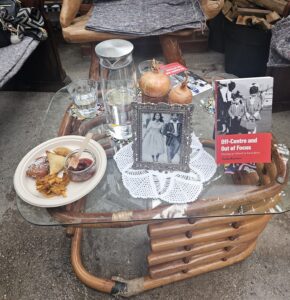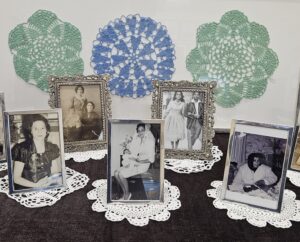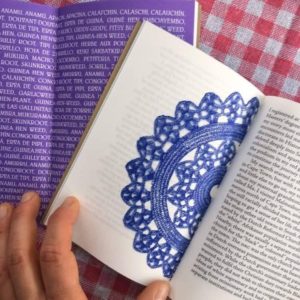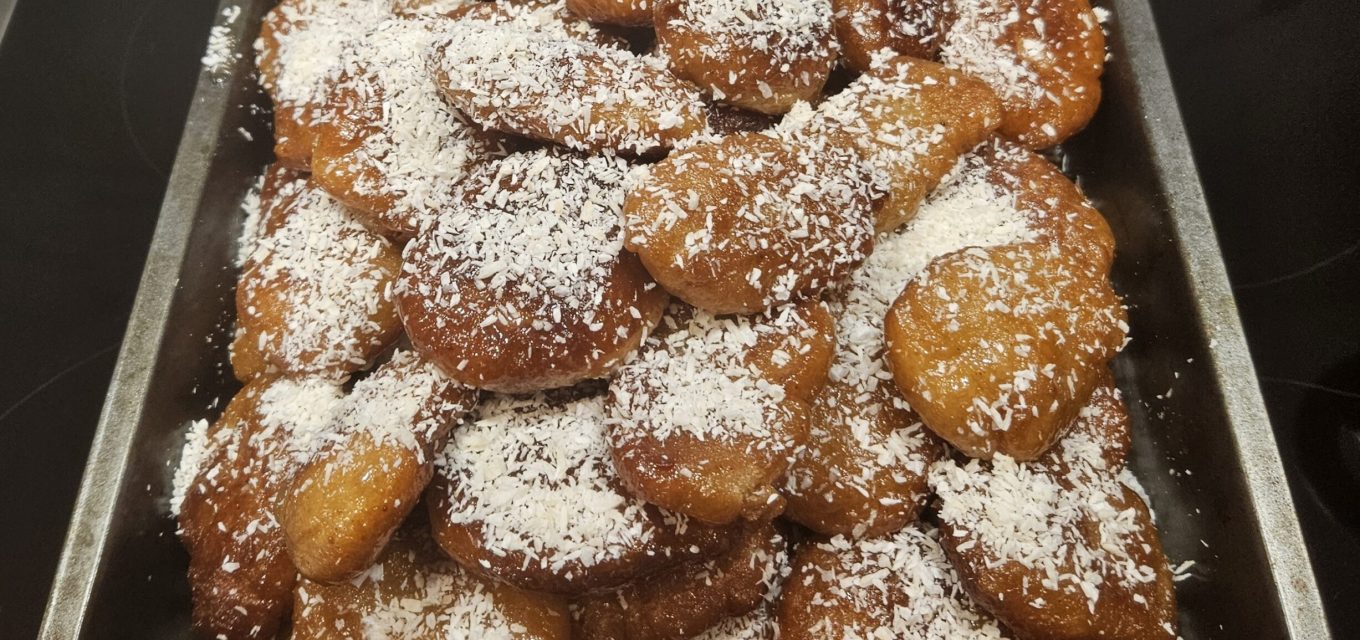
When I launched the second edition of my book, Off-Centre and Out of Focus, in London recently, I wanted to recreate the warmth of the first book launch, held in the District Six Homecoming Centre, to welcome guests. I had brought a couple of the doilies my grandmother had crocheted, along with framed photos of my parents and grandparents to set the scene, but more was needed. And on a wet, grey wintry day in London, koesisters seemed to me the most obvious Cape Town food to have. I had already tracked down samosas and dhaltjies that were as close to home as they could be, via a Bengali women’s empowerment organization, Oitij-jo. Koesisters, the spicy fried doughnuts, sugared and sprinkled with coconut, were not to be found in London which otherwise boasts a range of South African foods and treats. So, it was up to me. I had never made them from scratch before but entered into the spirit of having my ancestors with me completely.
I remember my paternal grandmother making koesisters. When we were little, we would save the peels from the naartjies we ate and my father dried them in the sun so that my grandmother could grind them up to add to her koesister mixture. As a young boy, my father and his brothers were sent to sell them door-to-door on Sunday mornings as a traditional accompaniment to coffee.
The koesister is characteristic of food that was creolised at the Cape. The majority of enslaved people who were brought here by the Dutch from Southeast Asia, worked in homes and those with cooking skills fetched higher prices. The settlement at the Cape brought together diverse peoples and influences and the enslaved people creolised these influences in food, music and language, leading to a unique culture that is still strongly present in contemporary Cape Town, and I believe offers the foundation for a post-apartheid South African identity.
On a walking tour of the Bo-Kaap in December, the area where freed enslaved people were allowed to settle, archival researcher Daiyaan Petersen related a story about the koesister. In the kitchens of their Dutch masters, enslaved people would make the plaited syrupy fried doughnuts called koeksisters as instructed and with the leftover dough they would make their own version of the doughnut, known as koesisters in the Cape. Spices from southeast Asia, like star aniseed, ginger, cinnamon, and cardamom, were added to the dough, and it was formed into flattened oblong shapes. These would be fried, boiled in sugar syrup and then sprinkled with coconut before serving.
The heritage of colonialism, slavery and apartheid is firmly embedded in this food-as-archive, at the same time it is a celebration of my grandmother and all those grandmothers who made them as a means of earning a living, using what was available to them under an oppressive government.
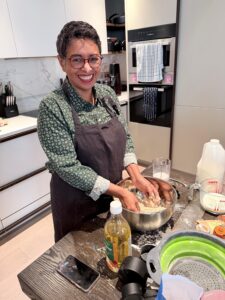
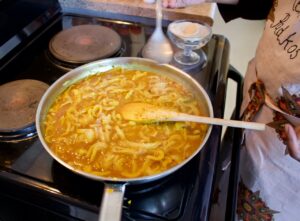
I spent two days making koesisters – shopping for the ingredients, making a test batch and then a batch for the launch. The dough was left to rise for two hours, and again for half an hour after it had been shaped. As my son and daughter captured the process on film, I shared anecdotes with them, every step imbued with memories of my family. As we did the taste test (for the umpteenth time!) I was confident that my father and grandmother would have been so pleased to know that this everyday treat was being warmly shared in London.
The video can be viewed on Instagram