Categories
History and Heritage lost narratives

Straining Against the Archives

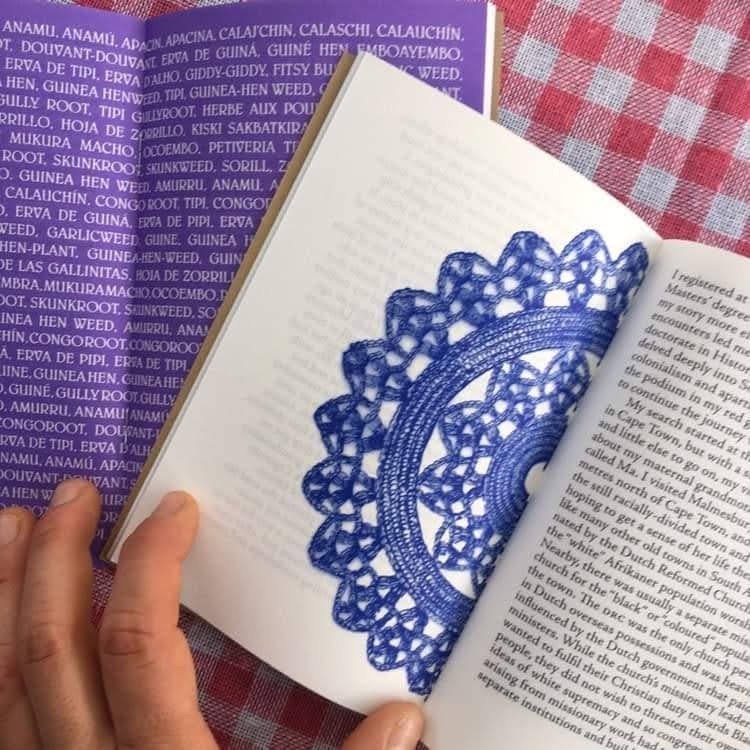
A gathering was recently held in Cape Town to read my essay, Unpick, Restitch: Doilies, Medorahs and Labouring Plants. The essay is the first in the Fieldguides for a Preternaturalist series of chapbooks, within the project, Nothing of Importance Occurred: Recuperating a Herball for a 17th Century Enslaved Angolan Midwife at the Cape. The project was inititated by South African artist, Wendy Morris, whose enslaved ancestor, Maaij Claesje of Angola, was a midwife in the Company slave lodge in Cape Town.

My writing is about trying to piece together a narrative of who I am, where I come from, and where I belong. In order to recuperate these erased narratives, I have drawn from an ordinary archive – oral history, family photos and objects like my grandmother’s scarves and the doilies she crocheted. The objects that our grandparents found important to make, keep and pass down to us, give us a sense of belonging. The things that they touched and used, hold a history that fills in the blanks in the official archives and challenge the dominant narratives that would have us believe that we were less-than.

During my research, I came across the Flower of Maryam, the labouring plant of the essay title. The plant, which was usually brought back by pilgrims from Mecca in its dried state, had been used as a visual tool during labour and was passed down from one generation of women to the next. At the start of our programme I immersed the plant in a bowl of water to help us keep track of time.

After Wendy gave an overview of the larger project, story-teller and poet, Philippa Kabali Kagwa, led us into the reading with an invocation. It was a privilege to hear my essay read in a multitude of voices that cut across any divisions of colour, religion, gender or age, and a testimony to the power of story to connect us. By the time our gathering came to a close, the Flower of Maryam had opened, a powerful representation of rebirth, community memory and women’s agencies over their bodies.

The gathering was organised by Deep Histories, Fragile Memories, a research group at LUCA School of Arts, Brussels, and the Cape Town Museum.
From Signal Hill to the Kamiesberg and beyond

This is a journey of understanding, from Signal Hill, in Cape Town, where the voices of our enslaved and exiled ancestors bid us well and offer protection on the journey …

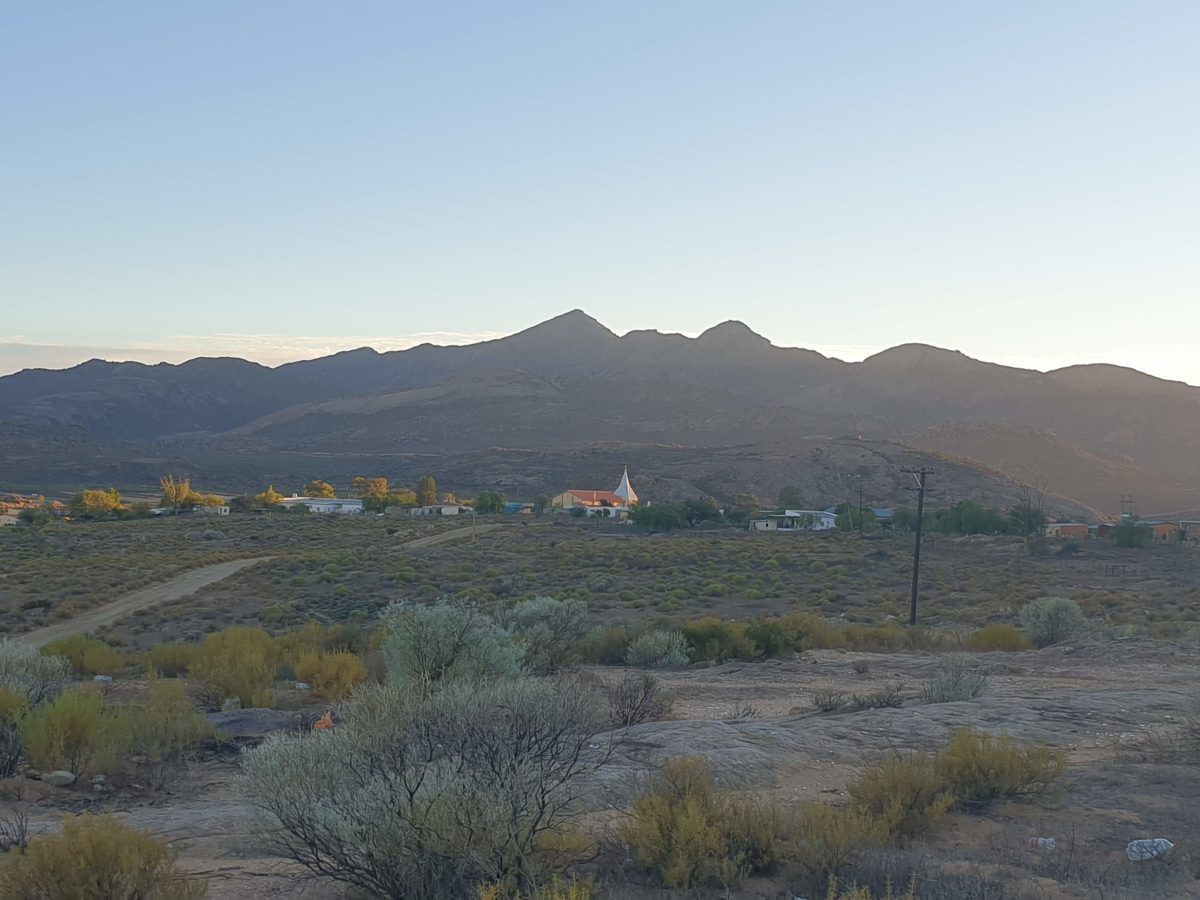
… to the Kamiesberg, in Namaqualand, where our indigenous ancestors have dwelt for more than a thousand years …

… as we follow the path of an 1865 expedition to the Land of the Amacqua, led by Simon van der Stel, Commander of the Cape, under the auspices of the Dutch East India Company …

…  for these three strands – enslaved and exiled, indigenous, and European, are inextricably linked in the history of this country.

I travel in the Company of the Wandering Womb, on the first leg of a journey of return towards Angola, the home of an enslaved ancestor who birthed her children in the slave lodge in the Cape. I join the journey because I am curious about the Kamiesberg, the mountain that bears my name, and what it means in terms of a heritage denied by the Company that traded people and spices – the Dutch East India Company.

I have been a collaborator in the project Nothing of Importance Occurred initiated by South African artist, Wendy Morris, since 2021 when I wrote the first of the Fieldguides for a Preternaturalist, Unpick Restitch: Doilies, Medorahs and Labouring Plants. Together we have organised Fieldguide Gatherings in South Africa (Cape Town Medical Museum and Paulshoek, Kamiesberg, April 2023) and have made three fieldtrips together (Cape Town to the Namibian border 2022, Cape Town to the Kamiesberg, Namaqualand 2023, and Windhoek to Aus, Namibia 2025). We have jointly presented the Fieldguides at the University of Edinburgh, Scotland (Nov 2024).

Fieldguides for a Preternaturalist is a series of small chapbooks designed to bring collaborators, audiences and readers together within the project, Nothing of Importance Occurred: Recuperating a Herball for a 17th Century Enslaved Angolan Midwife at the Cape. This is an artistic project aimed at recuperating missing narratives at the Cape through speculative investigations of plants-as-archive and storytelling-as-method.

Above: the Kramat Of Sheikh Mohamed Hassen Ghaibie Shah on Signal Hill, the starting point of our journeys

Featured Image: Kamieskroon at the foot of the Kamiesberge.

Read preliminary musings on the search for the name Kamies in an article published by Reclamation Magazine.