Categories
History and Heritage

Food as Archive – my grandmother’s koesisters

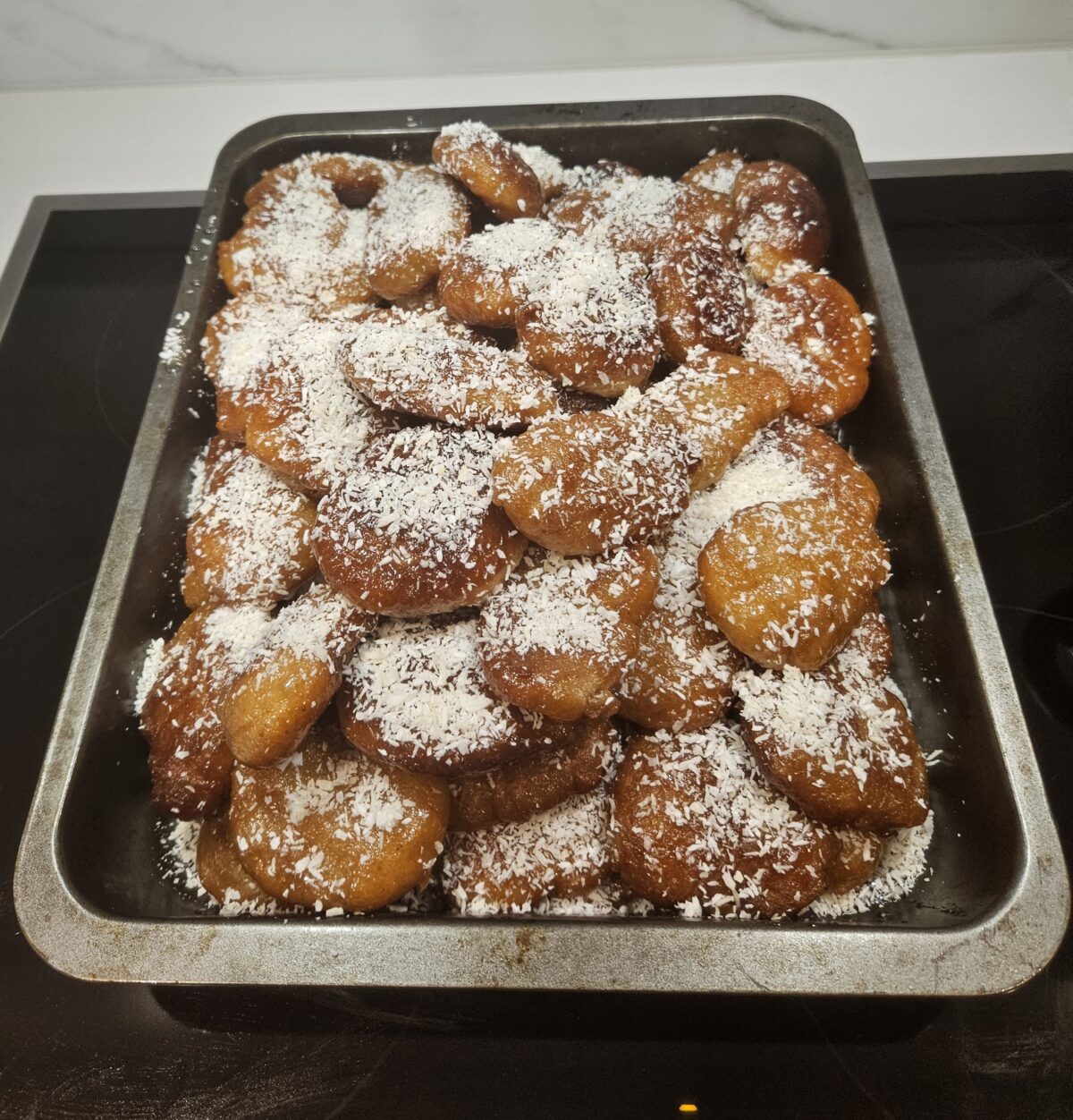
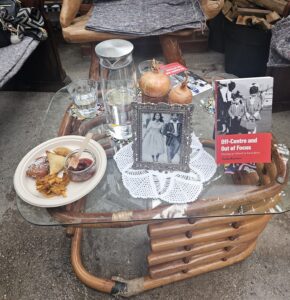
When I launched the second edition of my book, Off-Centre and Out of Focus, in London recently, I wanted to recreate the warmth of the first book launch, held in the District Six Homecoming Centre, to welcome guests. I had brought a couple of the doilies my grandmother had crocheted, along with framed photos of my parents and grandparents to set the scene, but more was needed. And on a wet, grey wintry day in London, koesisters seemed to me the most obvious Cape Town food to have. I had already tracked down samosas and dhaltjies that were as close to home as they could be, via a Bengali women’s empowerment organization, Oitij-jo. Koesisters, the spicy fried doughnuts, sugared and sprinkled with coconut, were not to be found in London which otherwise boasts a range of South African foods and treats. So, it was up to me. I had never made them from scratch before but entered into the spirit of having my ancestors with me completely.

I remember my paternal grandmother making koesisters. When we were little, we would save the peels from the naartjies we ate and my father dried them in the sun so that my grandmother could grind them up to add to her koesister mixture. As a young boy, my father and his brothers were sent to sell them door-to-door on Sunday mornings as a traditional accompaniment to coffee.

The koesister is characteristic of food that was creolised at the Cape. The majority of enslaved people who were brought here by the Dutch from Southeast Asia, worked in homes and those with cooking skills fetched higher prices. The settlement at the Cape brought together diverse peoples and influences and the enslaved people creolised these influences in food, music and language, leading to a unique culture that is still strongly present in contemporary Cape Town, and I believe offers the foundation for a post-apartheid South African identity.

On a walking tour of the Bo-Kaap in December, the area where freed enslaved people were allowed to settle, archival researcher Daiyaan Petersen related a story about the koesister. In the kitchens of their Dutch masters, enslaved people would make the plaited syrupy fried doughnuts called koeksisters as instructed and with the leftover dough they would make their own version of the doughnut, known as koesisters in the Cape. Spices from southeast Asia, like star aniseed, ginger, cinnamon, and cardamom, were added to the dough, and it was formed into flattened oblong shapes. These would be fried, boiled in sugar syrup and then sprinkled with coconut before serving.

The heritage of colonialism, slavery and apartheid is firmly embedded in this food-as-archive, at the same time it is a celebration of my grandmother and all those grandmothers who made them as a means of earning a living, using what was available to them under an oppressive government.
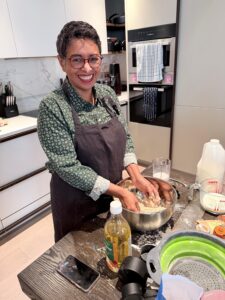
I spent two days making koesisters – shopping for the ingredients, making a test batch and then a batch for the launch. The dough was left to rise for two hours, and again for half an hour after it had been shaped. As my son and daughter captured the process on film, I shared anecdotes with them, every step imbued with memories of my family. As we did the taste test (for the umpteenth time!) I was confident that my father and grandmother would have been so pleased to know that this everyday treat was being warmly shared in London.

The video can be viewed on Instagram
 

From Signal Hill to the Kamiesberg and beyond

This is a journey of understanding, from Signal Hill, in Cape Town, where the voices of our enslaved and exiled ancestors bid us well and offer protection on the journey …

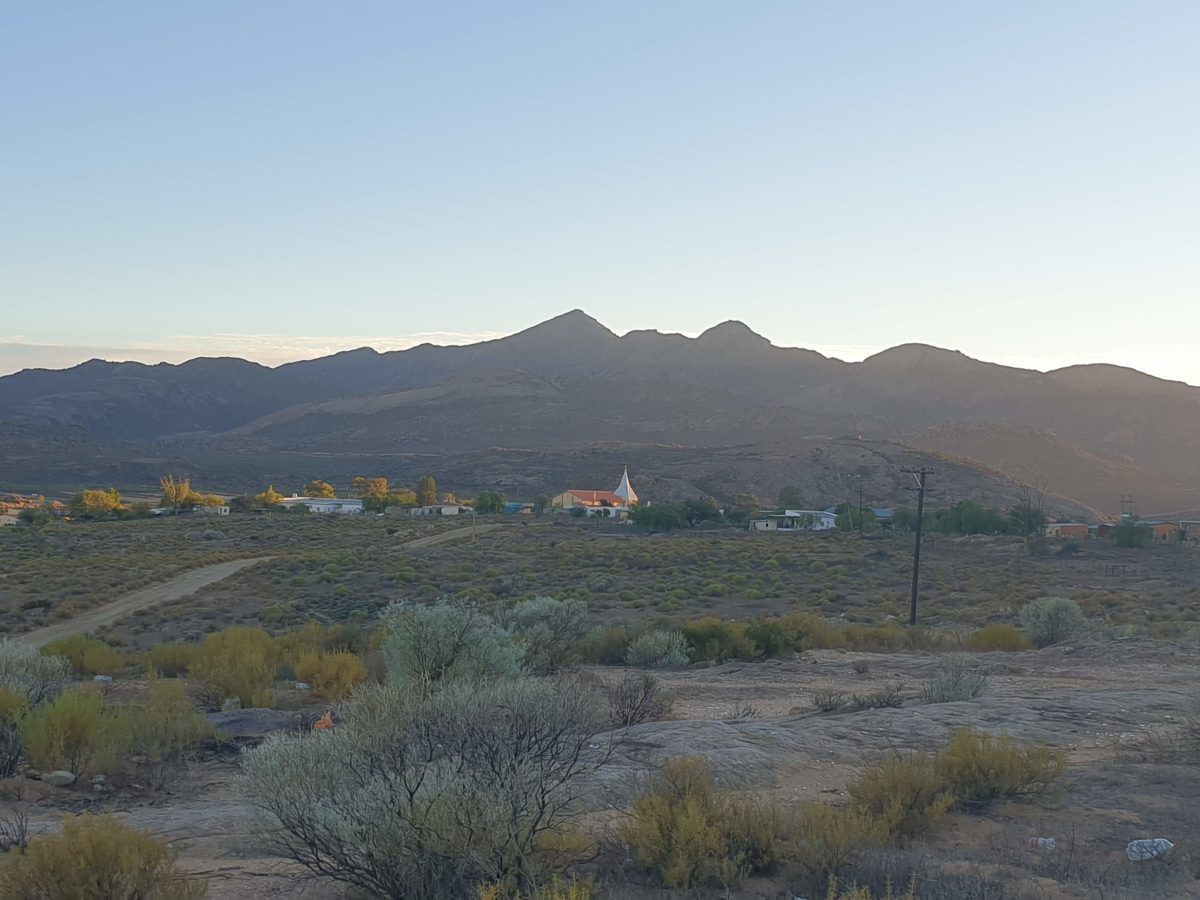
… to the Kamiesberg, in Namaqualand, where our indigenous ancestors have dwelt for more than a thousand years …

… as we follow the path of an 1865 expedition to the Land of the Amacqua, led by Simon van der Stel, Commander of the Cape, under the auspices of the Dutch East India Company …

…  for these three strands – enslaved and exiled, indigenous, and European, are inextricably linked in the history of this country.

I travel in the Company of the Wandering Womb, on the first leg of a journey of return towards Angola, the home of an enslaved ancestor who birthed her children in the slave lodge in the Cape. I join the journey because I am curious about the Kamiesberg, the mountain that bears my name, and what it means in terms of a heritage denied by the Company that traded people and spices – the Dutch East India Company.

I have been a collaborator in the project Nothing of Importance Occurred initiated by South African artist, Wendy Morris, since 2021 when I wrote the first of the Fieldguides for a Preternaturalist, Unpick Restitch: Doilies, Medorahs and Labouring Plants. Together we have organised Fieldguide Gatherings in South Africa (Cape Town Medical Museum and Paulshoek, Kamiesberg, April 2023) and have made three fieldtrips together (Cape Town to the Namibian border 2022, Cape Town to the Kamiesberg, Namaqualand 2023, and Windhoek to Aus, Namibia 2025). We have jointly presented the Fieldguides at the University of Edinburgh, Scotland (Nov 2024).

Fieldguides for a Preternaturalist is a series of small chapbooks designed to bring collaborators, audiences and readers together within the project, Nothing of Importance Occurred: Recuperating a Herball for a 17th Century Enslaved Angolan Midwife at the Cape. This is an artistic project aimed at recuperating missing narratives at the Cape through speculative investigations of plants-as-archive and storytelling-as-method.

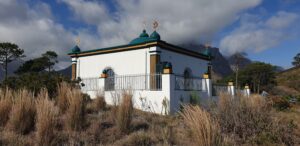
Above: the Kramat Of Sheikh Mohamed Hassen Ghaibie Shah on Signal Hill, the starting point of our journeys

Featured Image: Kamieskroon at the foot of the Kamiesberge.

Read preliminary musings on the search for the name Kamies in an article published by Reclamation Magazine.

Towards Freedom

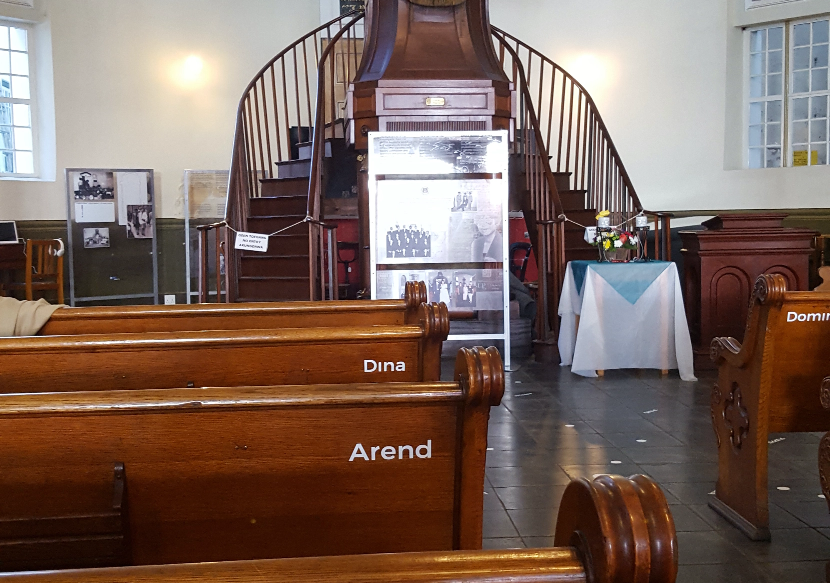
The Slave Church, Cape Town (2018)

The Slave Church in Long Street, Cape Town, is the oldest existing mission building in South Africa and the third oldest church in the country. The gabled cream and white façade with Corinthian pilasters, cornices and mouldings, mimics that of the Dutch East India Company’s Slave Lodge at the top of Adderley Street.

The building was probably constructed by enslaved people and free blacks for general religious activities and to prepare converts for membership of established churches. It became a separate congregation of the SA Missionary Society in 1819 and part of the Dutch Reformed Church in 1937. The church was in use until 1971 when dwindling numbers as a result of forced removals led to its closure.

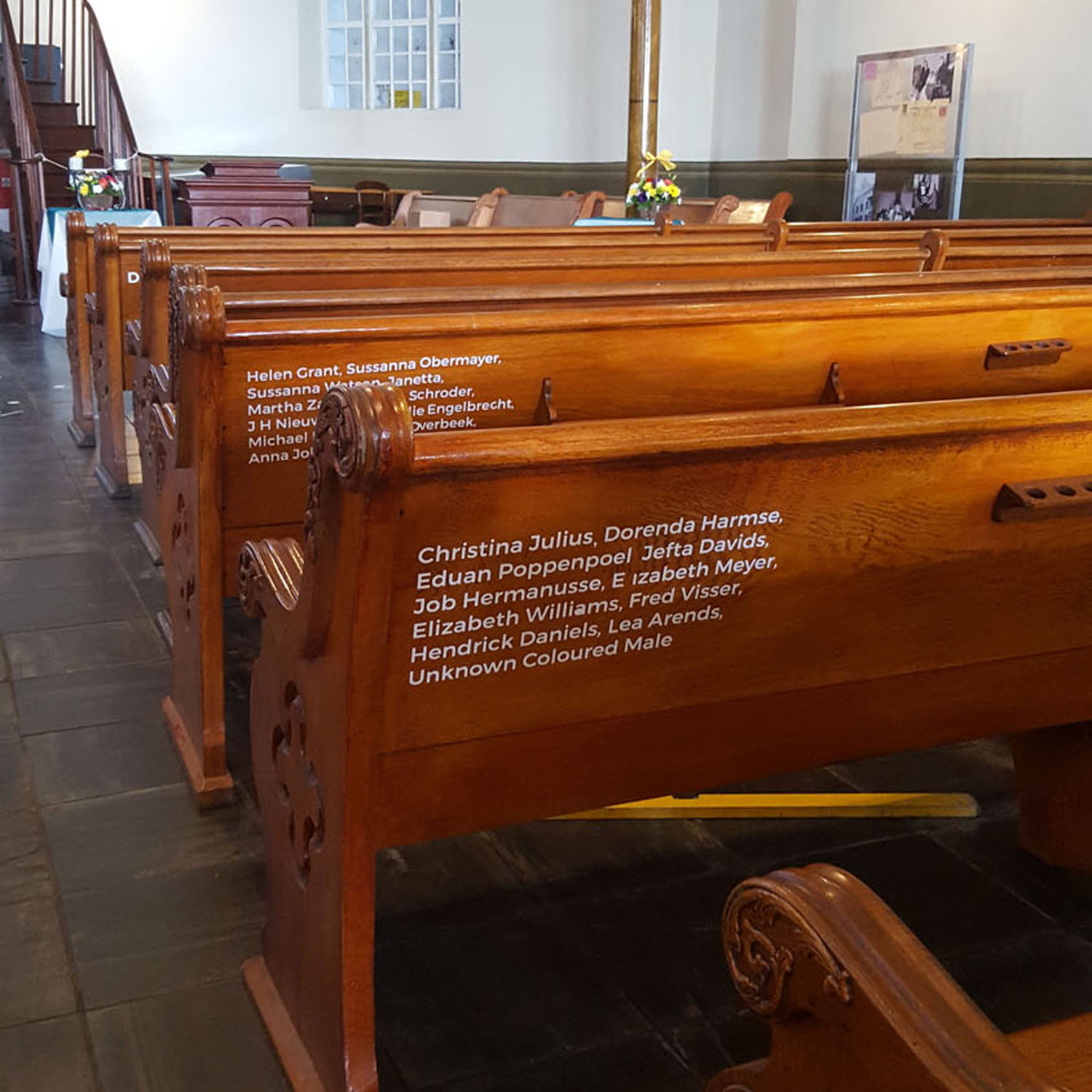
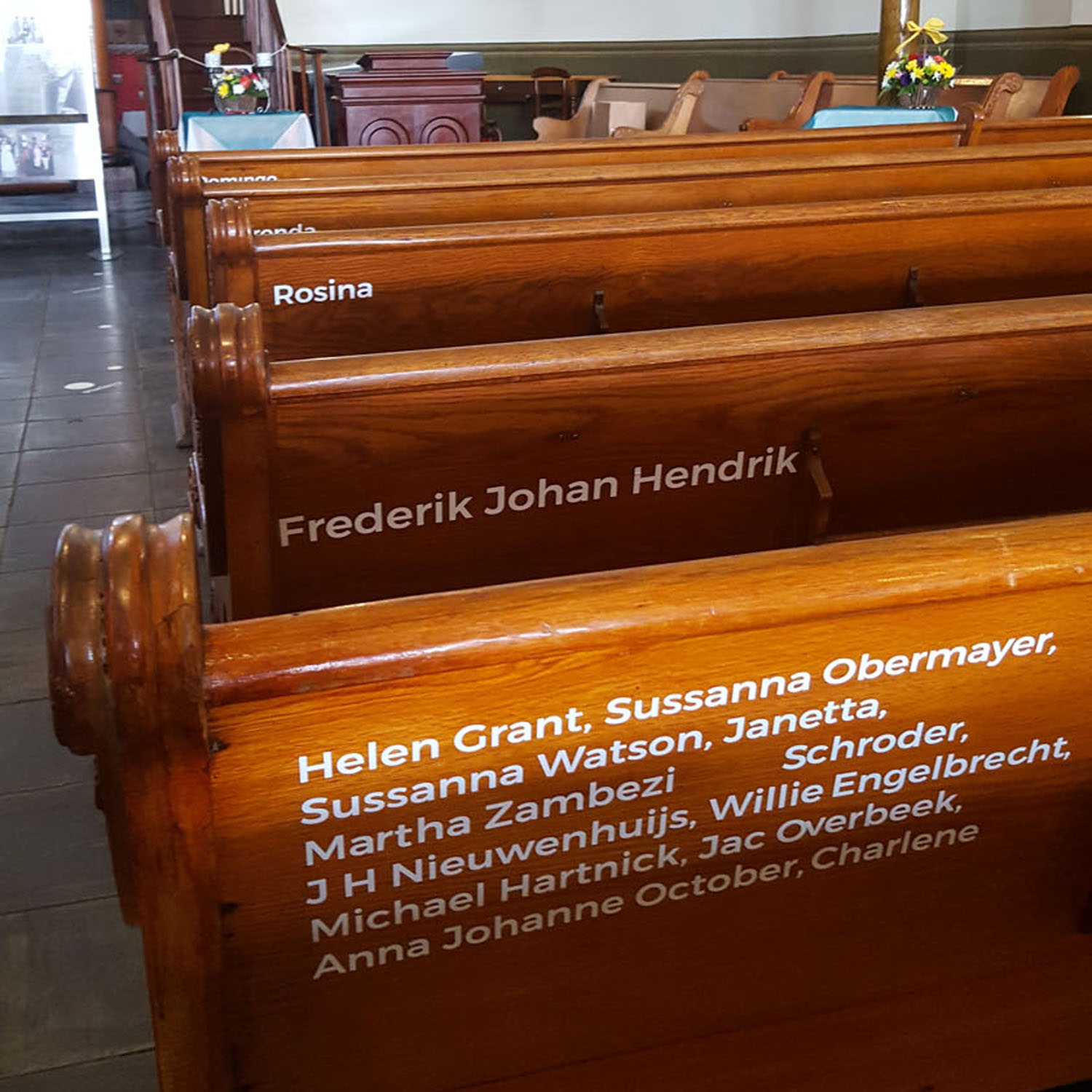
The exhibition, Towards Freedom, focuses on shedding light on the silenced histories of the people who built this building and those who worshipped here. One of the ways this has been commemorated is by printing the names of the first eight enslaved people to be baptised here, on the backs of the pews as can be seen in the photographs.

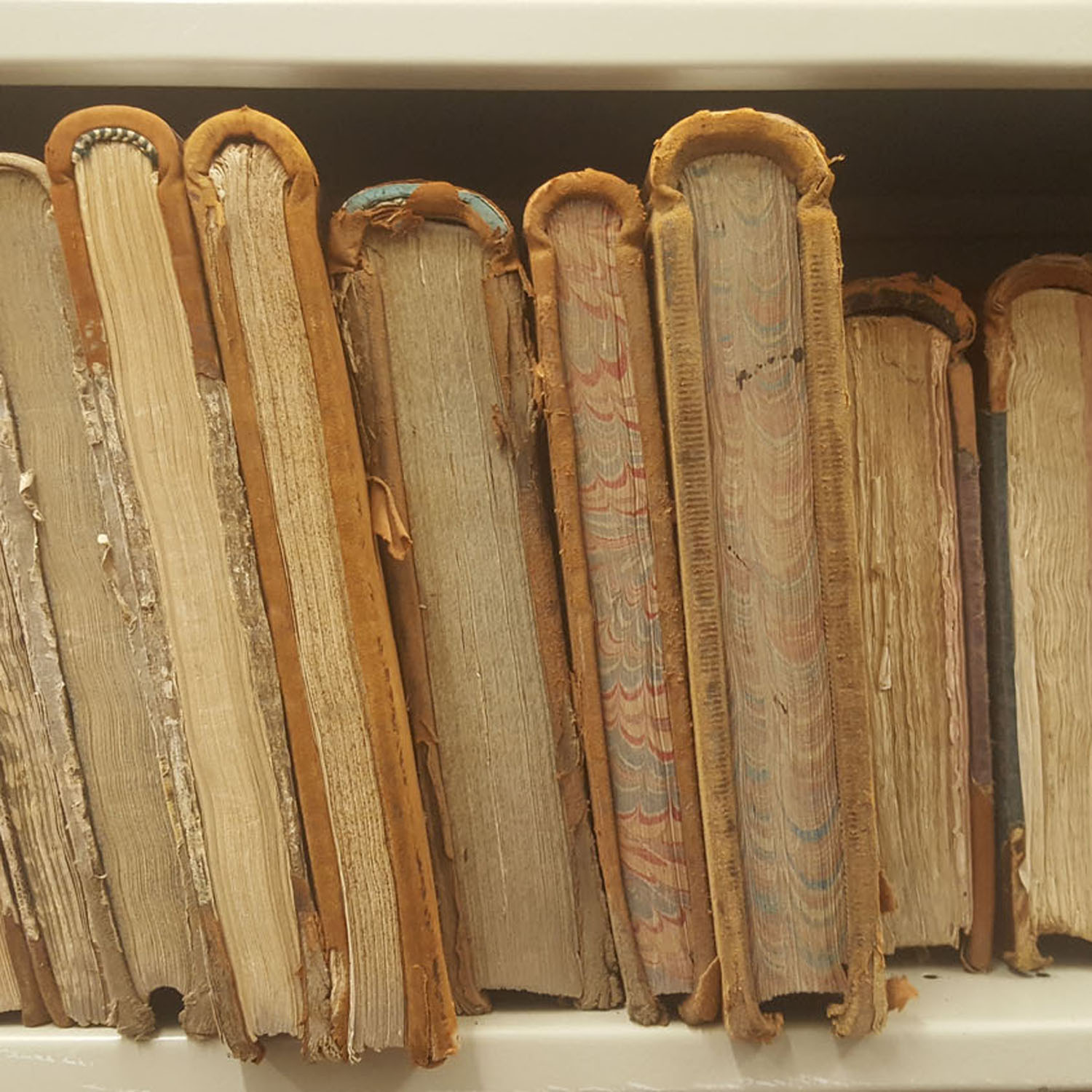
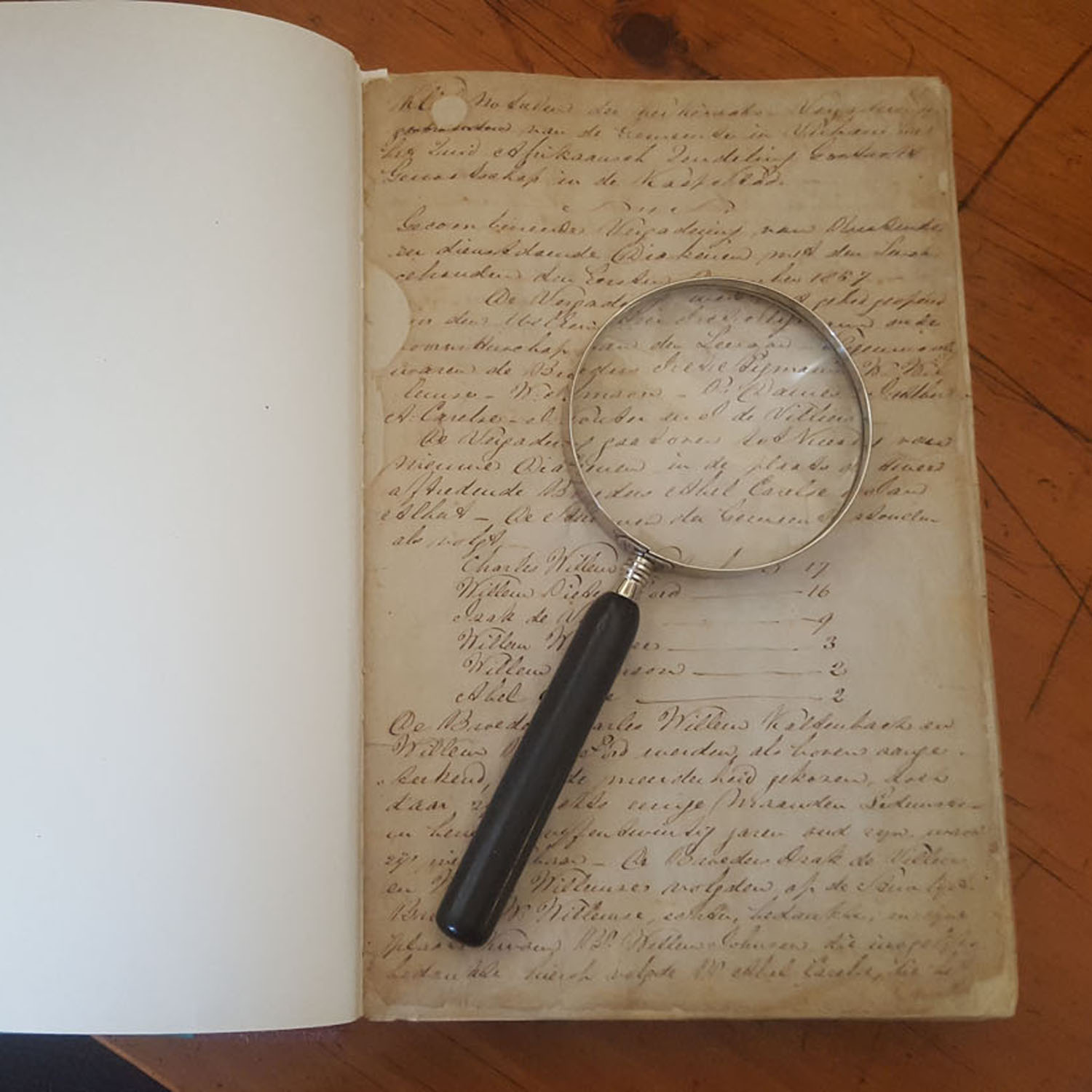
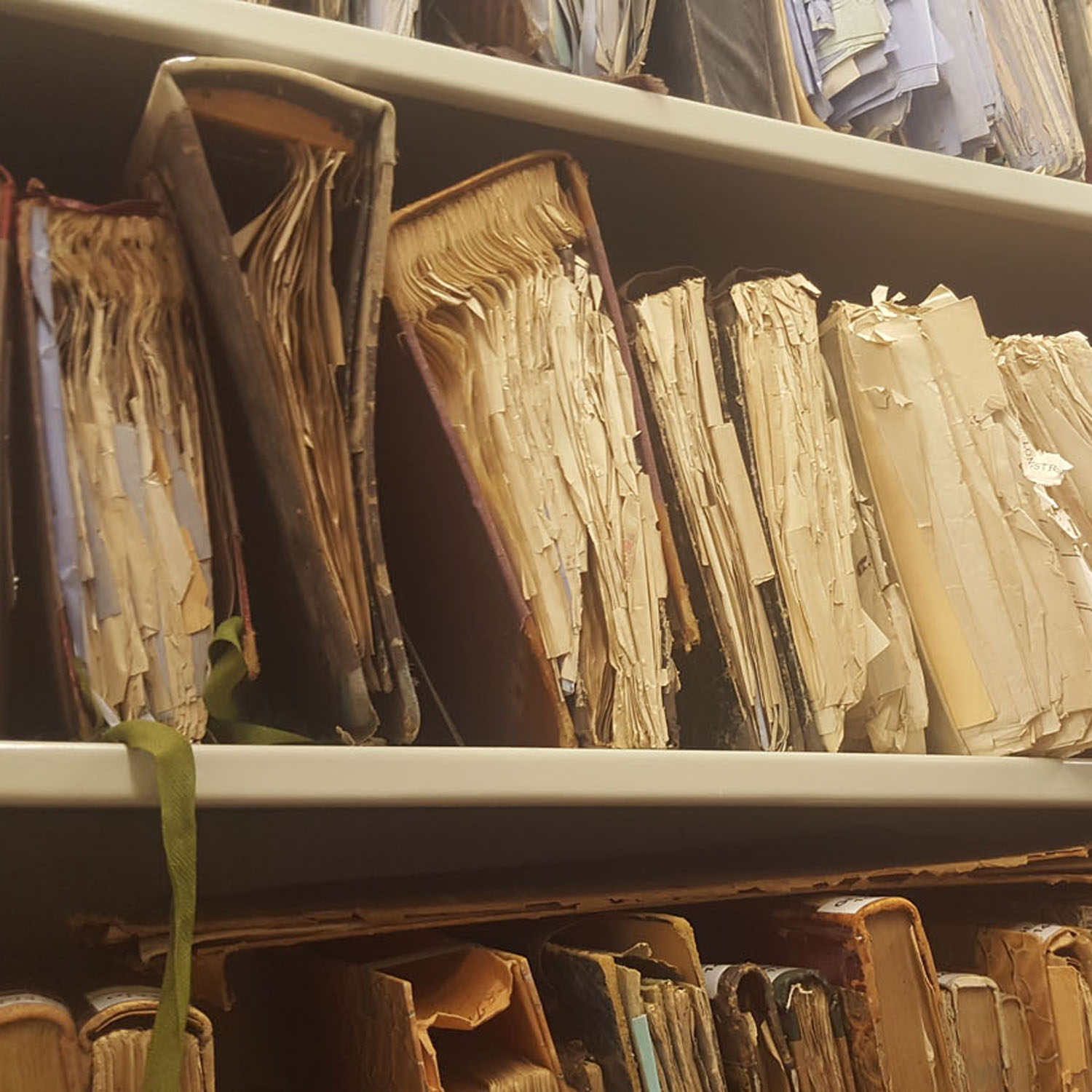
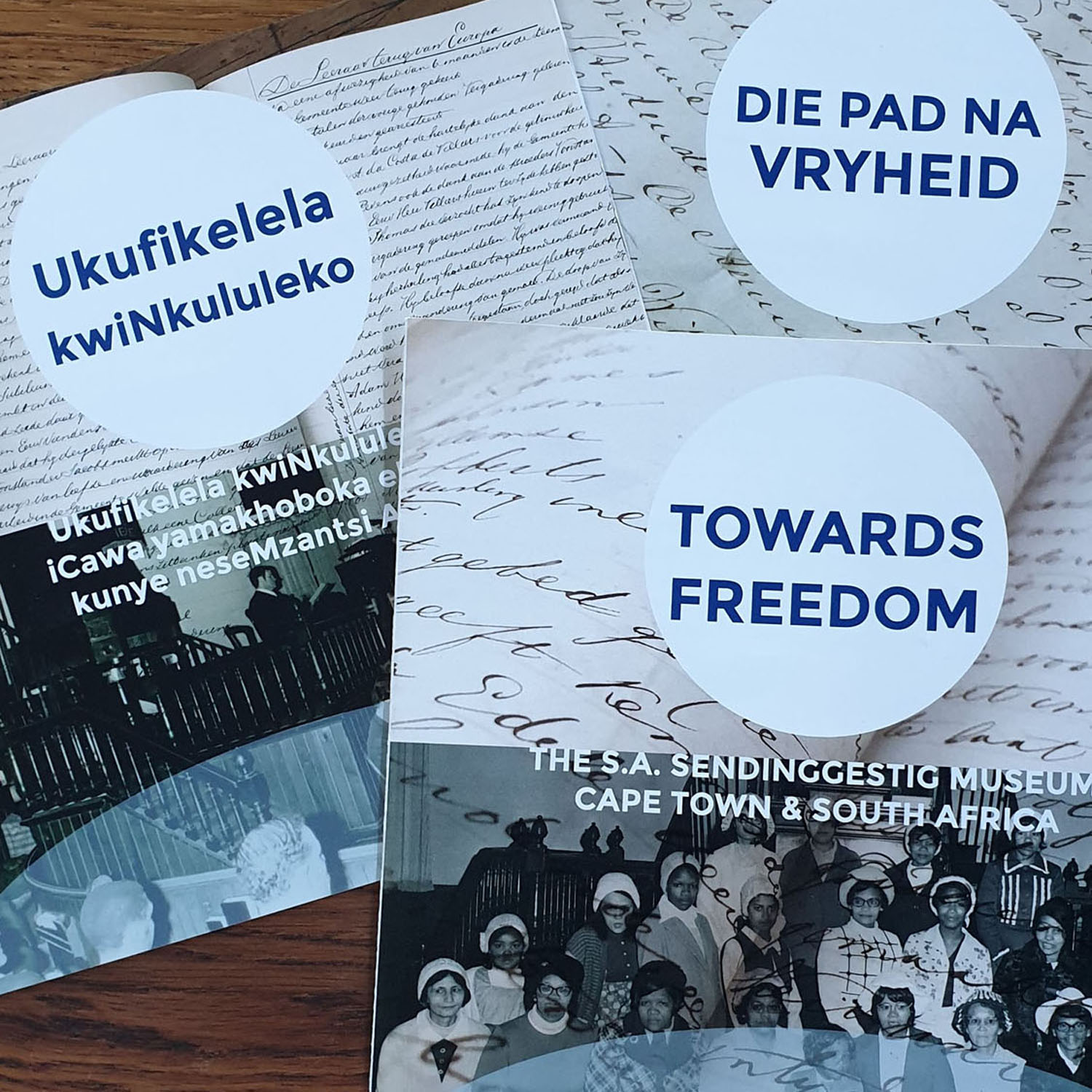
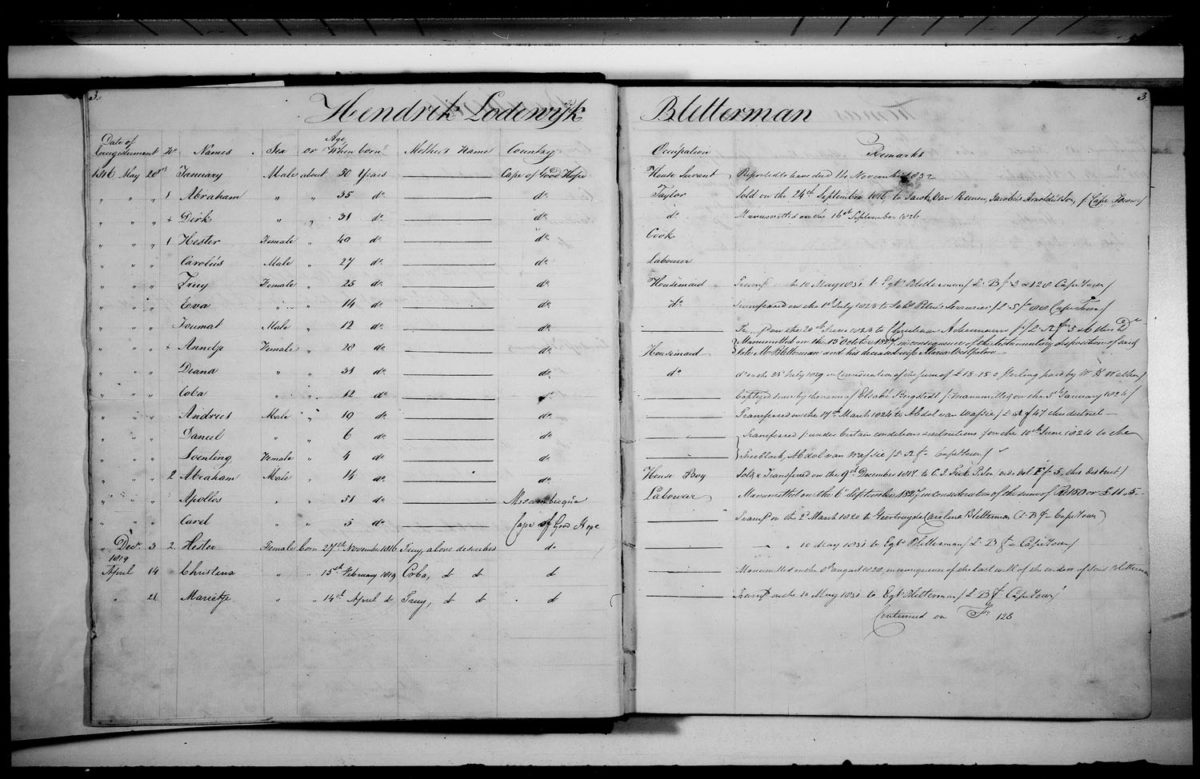
[Other images were taken at the archives of the Dutch Reformed Church in Stellenbosch, and one shows the brochures for the exhibition produced in English, Afrikaans and isiXhosa.]

Read more here: Let’s ensure slaves are more than footnotes to history

And here:  Slave Church Museum

Retitled: Slavery and Freedom

Blettermanhuis, Stellenbosch (2019)

Hendrik Lodewyk Bletterman became the landdrost of Stellenbosch in 1785, the last magistrate to be appointed by the VOC (Dutch East India Company) at Stellenbosch (1785-1795). He resigned in protest over the first British occupation (1795-1803) of the Cape. His residence, Blettermanhuis, now forms part of the Stellenbosch Village Museum.

The brief for this exhibition was to provide an insight into the lives of the enslaved who worked in the house but whose voices had been silenced. Bletterman himself owned at least fifteen slaves, some of them children, as evidenced in the ledger that he and his wife kept. The exhibition attempts to situate Blettermanhuis and Stellenbosch within the larger framework of the practice of enslavement at the Cape.

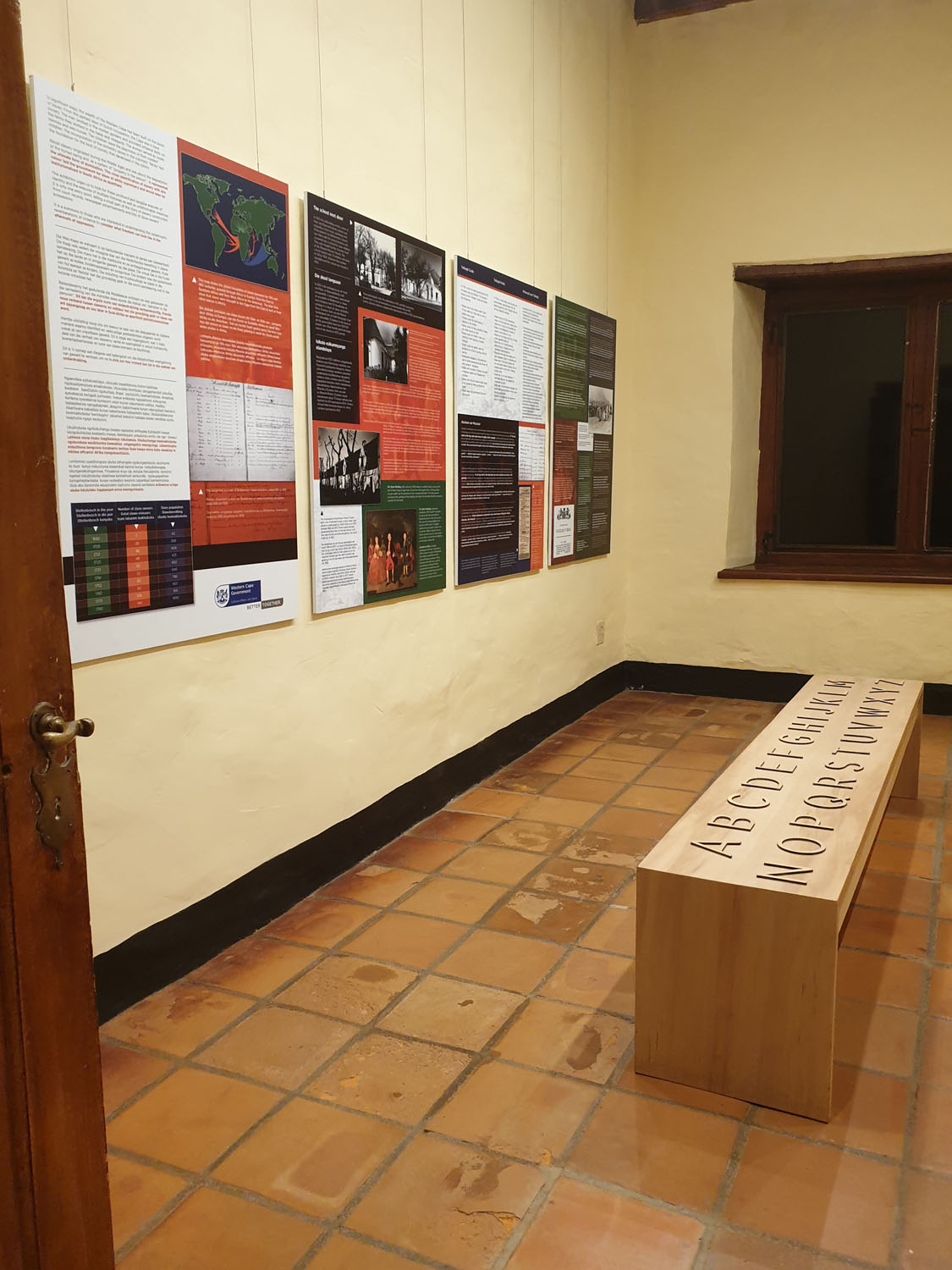
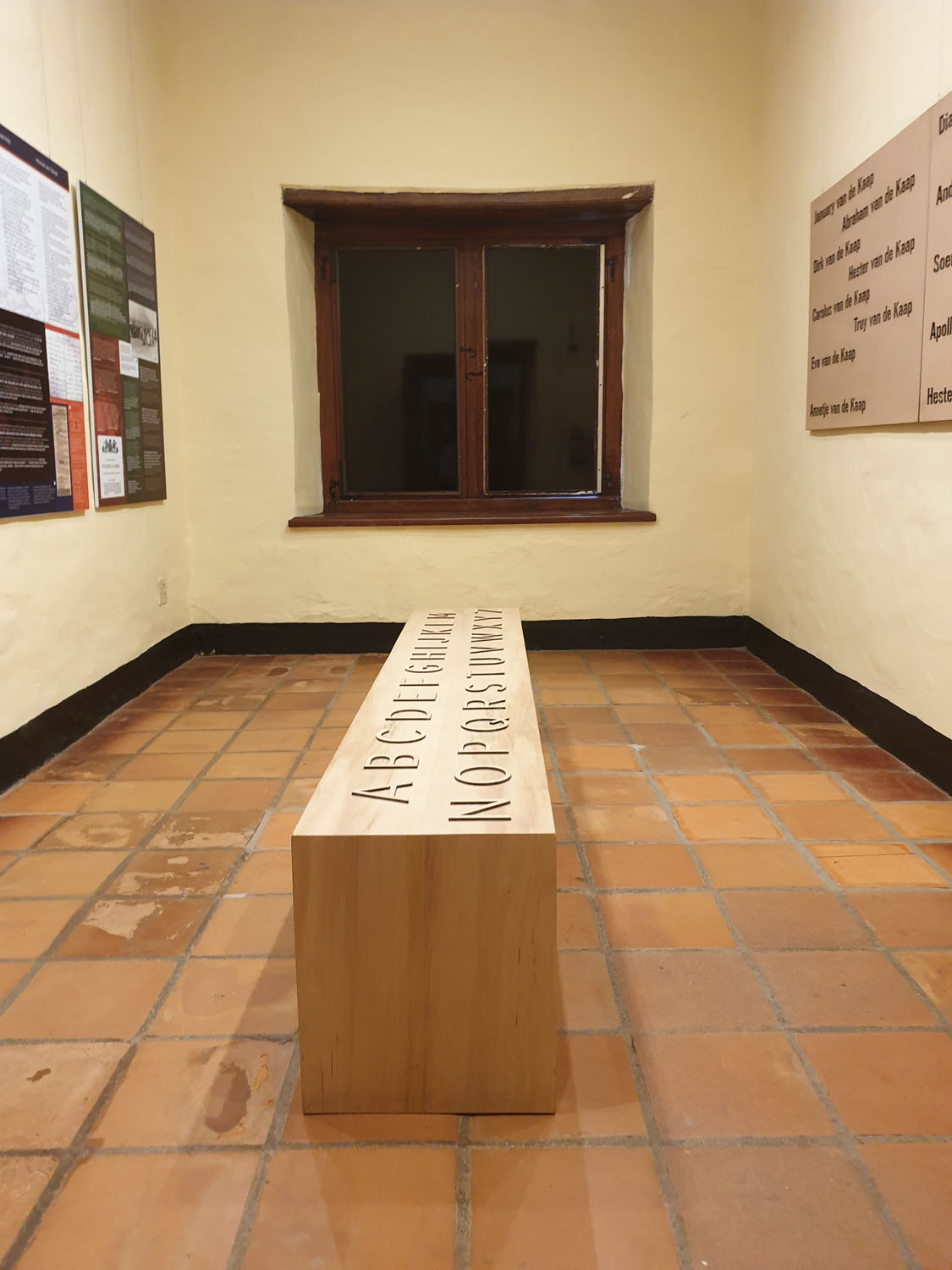
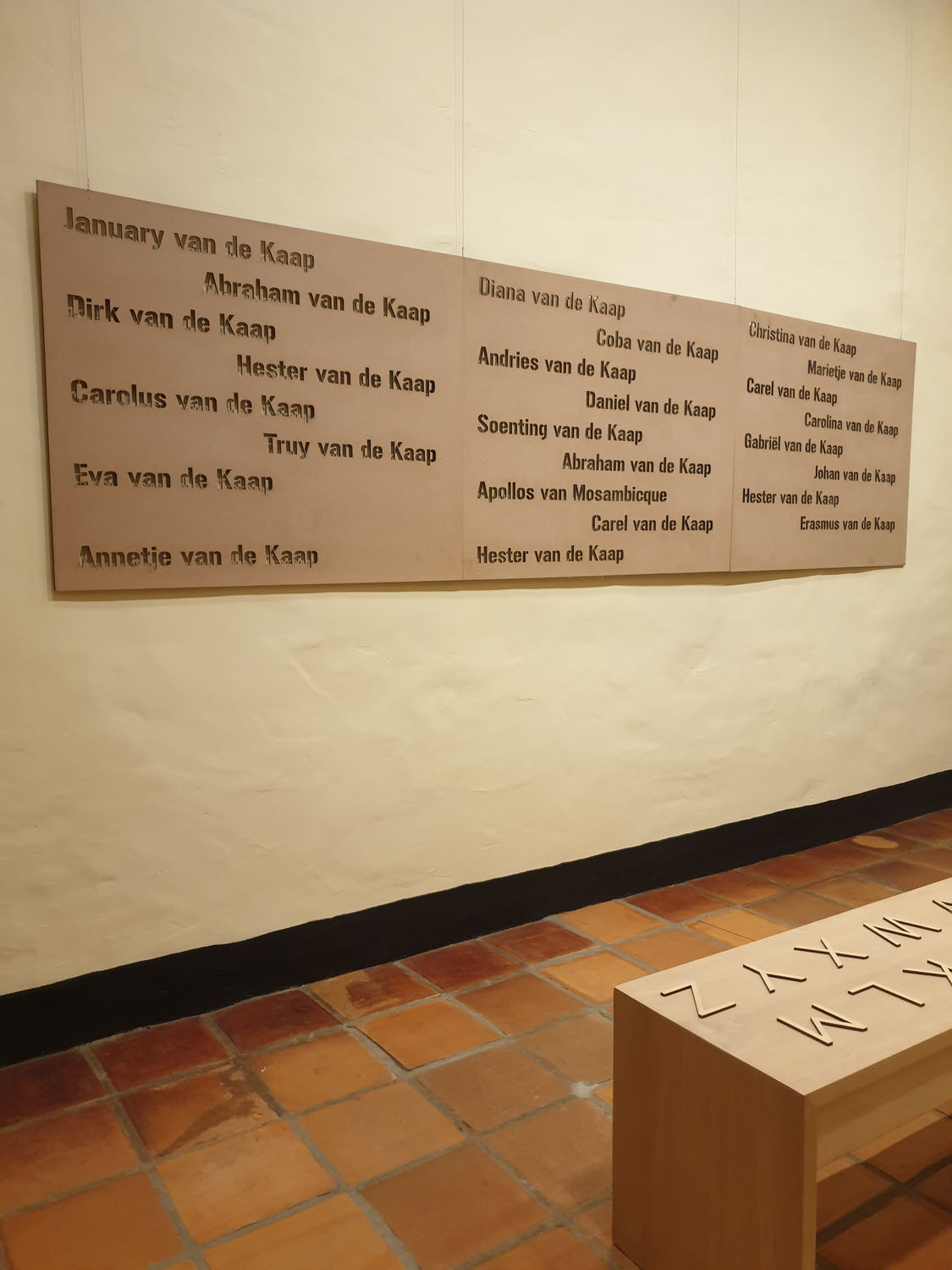
These silenced voices have been acknowledged on the wall of an annex in the house. The bench with laser-cut letters, references the later use of the outbuilding as a school for enslaved children.

Read more here:  Stellenbosch Village Museum

Categories
SLAVERY, RACISM & APARTHEID

Echoes of Slavery

By:  Prof Siona O’Connell, Critical African Studies Project, UP

Dr Nadia Kamies, Post-Doc Dept Historical & Heritage Studies, UP

The forced removal of over 12 million Africans to the Americas was one part of the trade-in human bodies. Another aspect, is the people who were shipped to the Cape in the Indian Ocean slave trade. From its inception, the Cape was a slave society, violently established on the backs of men and women who were stripped of their names, cultures and religions, and forced to work in the kitchens and vineyards of their enslavers. In 1652, as colonial administrator of the Verenigde Oost-Indische Compagnie (VOC), Jan Van Riebeeck dropped anchor at the Cape to establish a refreshment station with 100 men and eight women. A year later, the first known slave, Abraham van Batavia, a stowaway on board the Malacca, arrived.

The Dutch were active participants in both the Atlantic and Indian Ocean slave trades. For brief spells during the 17th century they dominated the Atlantic slave trade and were at the centre of the most expansive slave trade in the history of Southeast Asia. The VOC, formed in 1602, was a sovereign body which acted independently of the Dutch government although its headquarters were in the Netherlands. They were granted a monopoly over trade in the East Indies, where they enslaved over half of the population of Batavia (now Jakarta) and protected their monopoly with brute force, while painting slavery as a “work of compassion”. Racial slavery was an economic, legal, political and cultural exercise based on the refusal to see ‘blacks’ as human and amply justified by the Bible.

In late August of 1791, the uprising in Santo Domingo (now Haiti and the Dominican Republic) played a crucial role in the abolition of slavery, the slave trade and the weakening of colonialism. The British declared the slave trade illegal in 1807 and abolished the practice in all their colonies in 1834. Slaves at the Cape, however, were forced to serve an “apprenticeship” until 1838. On their emancipation, they had nowhere to go and had few possessions, if any. This created a dependency that served to tie many of the previously enslaved to their masters and the refuge the mission stations offered is thought to have ensured a close and steady supply of compliable workers to the surrounding farms. The Masters and Servants Ordinance of 1841 outlined how to accommodate ex-slaves and former “free blacks”, allowing employers to use certain disciplinary measures to control their behaviour. In fact, many of the Apartheid laws introduced in 1948 such as the pass laws and Group Areas Act reflected the restrictions used to control the movement of the enslaved.

Slavery was a central element of the Dutch colonial conquest and part of the emergence of Afrikaner political and social ideas. There can be no question that slavery fundamentally shaped South Africa from its earliest days and continued to do so along the continuum of colonialism and apartheid. As author and academic, Gabeba Baderoon (2014) observes “slavery generated foundational notions of race and sex in South Africa” that have largely been forgotten thanks to the propaganda that portrayed slavery as mild. The legacy of slavery continues to influence our perspectives today and is present in the prevailing attitudes towards labour provided by those who are ‘black’, evidenced in the mining, wine and domestic labour industries.

It is even present in the very names given to the enslaved. Whether from the mythological or the Biblical or after the places from which slaves came or after months of the year, these names echo the hope and tenacity of those trying to reimagine a future without chains. The months of December, January and February, for instance, hint at imagined possibilities, evident in recipes, ways of courtship, and the music we sing and dance to as we bask in the sun. In March, April and May, we see the quiet fortitude of autumn, apparent in the clothing workers of the Cape Flats who support up to nine people on their wages. In the blistery cold of June, July and August, we see what it means to achieve against immeasurable odds, of men and women raising their children and urging them to succeed; and in the quiet bloom of September, October and November, we see the promise of youth, who know where they come from, and what they and their forbearers are capable of achieving.

Note: 23 August commemorates the UN International Day of the Remembrance of the Slave Trade and its Abolition.

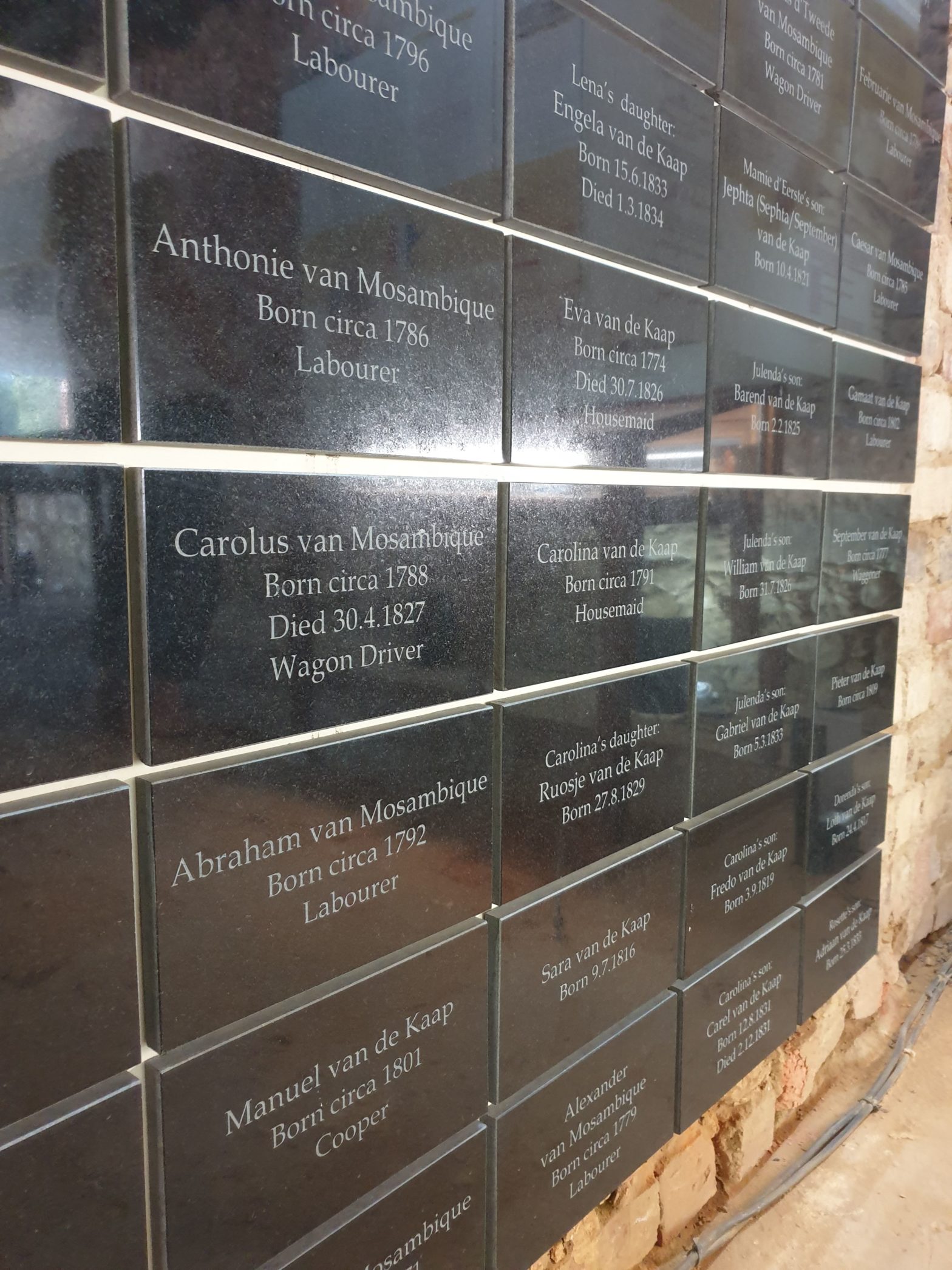
Featured image: A memorial wall with the names of the enslaved who lived and worked at the Solms-Delta Wine Estate in Franschoek. The naming shows how slaves were stripped of their identity and given names that indicated where they were born, as in “Van de Kaap” or “Van Mosambique”.

This piece was published in the Cape Times, Pretoria News and The Mercury 25 August 2020 and is also online here.

Categories
History and Heritage Uncategorized

Seeing the Other as Human

When I turned 50, I decided that it was time to equip myself with the tools necessary to write the stories of where we come from. I was convinced that providing a platform to share and acknowledge our painful past was fundamental to reconciliation in our country. Certainly, after 25 years of democracy we seemed to be no nearer to recognising each other as simply human. Being the mother of two young adults bestowed on me a sense of urgency. However, gaining a Masters in Creative Writing (from the same university that in the 1980s required me to apply for a government permit to attend because of the colour of my skin), opened up the path to a deeply personal journey, one that would lead to a PhD in History and Heritage Studies.

Early on in this journey it became clear that I needed to retrace our history way back to the arrival of the Dutch at the Cape, an event that occurred within the global context of slavery and colonialism in which they were major players. The impact of slavery and colonisation on South African society has receded far behind the more dominant history of apartheid and yet, the racial hierarchy that accompanied it not only laid the foundation for apartheid, but shaped attitudes to race and sex that continue to inform the present.

The benign version of slavery presented to us at school was reinforced by charming paintings of colonial Cape Town, the colourful houses of the Bo-Kaap and images of benevolent masters who wanted only to ‘civilise’ and take care of the black bodies under their care. This narrative concealed the brutality and dehumanisation of the people who were brought here as a source of labour, a commodity, to be sold and traded. After emancipation, other ways to maintain control over workers were introduced, such as the notorious dop system that has left its legacy of foetal alcohol syndrome and high infant mortality rates in the Western Cape.

Racial slavery was about the degradation of the human being and simply being emancipated was not enough to know what it meant to be free, how to recreate ourselves and become independent. Apartheid tried to force us into being the same – we lived in the same areas, went to the same schools, married the same people. We carried our sameness around like a security blanket and retreated within it, afraid of the other; we developed our own stereotypes based on our ignorance of what was beyond those walls. More than simply the dismantling of apartheid legislation needs to be done in order that we may construct ways of life in which we acknowledge our human-ness rather than other-ness.

But, to remember slavery is also to remember the vibrant and diverse cultures, new language, food, music and beliefs that arose, and to honour the spirit of survival and resistance that was engendered. Somehow people managed to find ways to survive and hold onto that which made them human. These practices of freedom – music, art and storytelling – defy and resist the memories of slavery and apartheid and attest to a will to survive. Even the humble family photograph, in spite of it often showing little skill, and found stuffed into boxes or envelopes, has the power to destabilise the dominant narrative that would have us believe that we were less-than. They speak to the resistance of the human to being objectified and it is at this ordinary archive that we need to look if we want to understand what it means to be human.

By connecting the lines between all of our stories, whether they are auditory, visual or written, we may recognise our common humanity; we break down the walls that were constructed around us, to separate us from the other. When we reach out to each other we move beyond the process of othering, and towards freedom and equality so that we may think about how we may live. Only then may we learn how to be human.

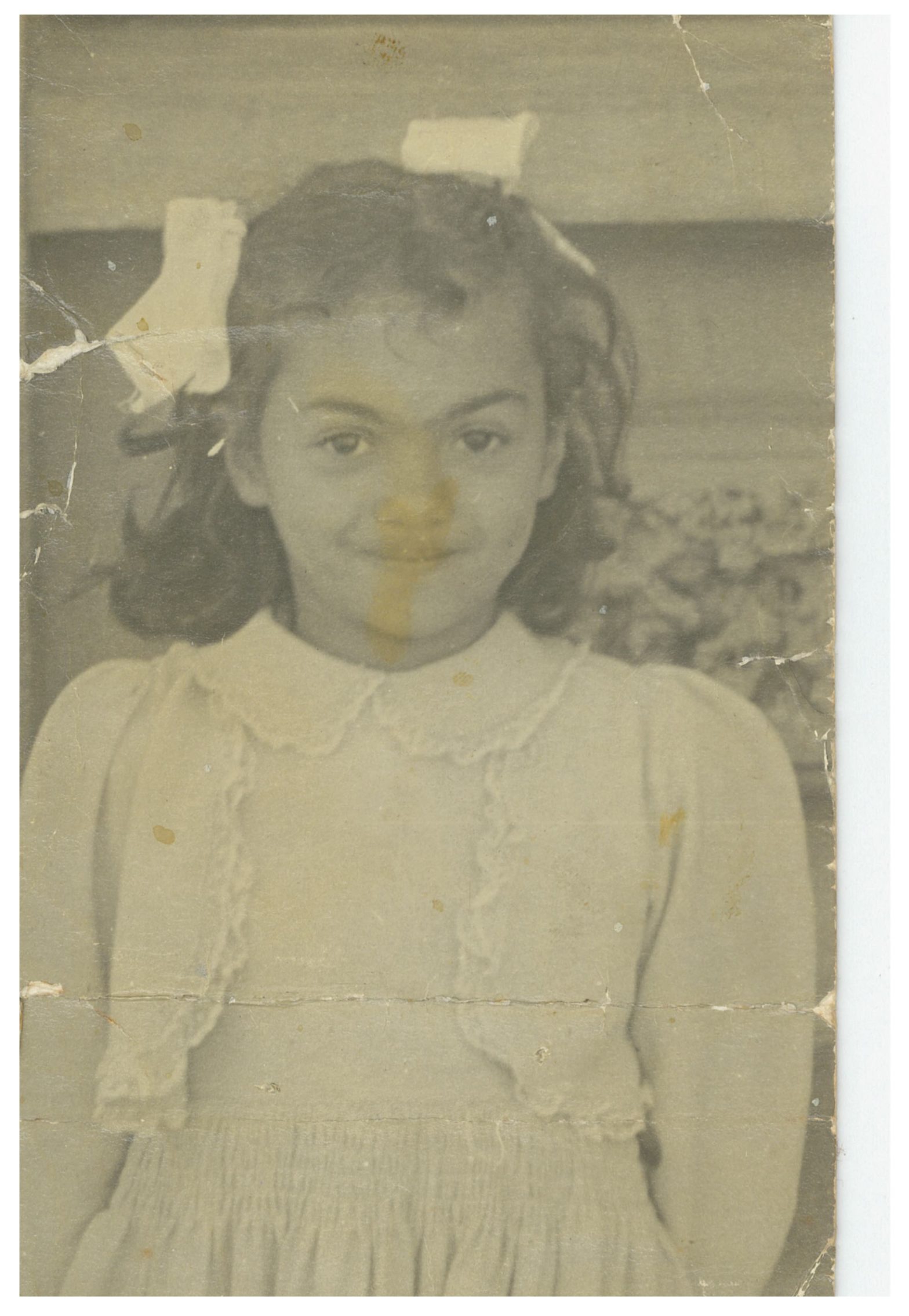
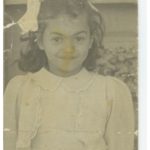
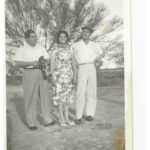
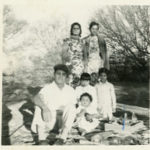
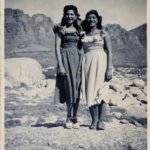
Images from my family album.

This piece prefaces the virtual exhibition, KWAAI Vol. 3 by Cape Town gallery, eclectica contemporary. 

Read a review of the exhibition here

Categories
History and Heritage

An Archive of Food

A few weeks ago I was meant to be on a road trip, doing research with colleagues from the University of Pretoria, and the USA and Denmark, around the theme of Food as Heritage & Archive. Due to COVID-19 our trip has been postponed indefinitely.

Preparations for the trip stirred up many memories, though, since food is so intimately wrapped up in my sense of community – memories of celebrations and funerals where everyone would rally together in support of their neighbour, bringing a plate of something or offering to cook a pot of food. After the gathering everyone would leave with a barakat, or blessing, in the form of a plate of leftovers. Traditions such as these hark back to a time when the enslaved would come together, bringing what little they had to share with one another. Later, during apartheid, celebrations with laden tables were also a way of demonstrating respectability in a society where people had little control over anything outside the domestic sphere.

One of our aims with this project is to look at the food practices that transcend lines of language, religion and economic status. This immediately got me thinking about a dish that seems to embody the history and heritage of the Cape – a uniquely South African dish – the pickled fish, or ingelegde vis, that my grandmothers, one Muslim and the other Christian, would make every Easter. Explanations for the origin of the dish abound, but it seems to have originated in the Cape during colonial times.

Pickling as a way of preserving the fish, possibly came from the Dutch tradition of pickling herring, and would have been enhanced by liberal additions of spices by the enslaved cooks at the Cape. My grandmothers would start the process the week before Good Friday. There would be no fishing boats going out over the Easter weekend so the fish would have had to be bought in advance, either directly off the boats in Kalk Bay harbour or from the fish market on the corner of Hanover and Clifton Street. I remember the merchant, with horse and cart, who hawked his wares through the neighbourhood, blowing his horn to alert our mothers and grandmothers.

The best fish to use was geelbek, kabeljou or yellow tail. Making the dish in advance meant that the fish was able to absorb the turmeric, cloves, chilli and all spice. Enough fish was pickled to last all weekend. This freed up time for my maternal grandmother to spend three hours in church on Good Friday, since she didn’t have to cook. Muslim families would take advantage of the time off to go on picnics, to visit kramats, with an ample supply of padkos (road food) since there would be nowhere to stop and eat along the way since restaurants would have been limited to those catering for “whites only”.

The rituals around food preparation and the coming together to share it, are examples of the everyday practices of what it means to be human, in spite of living through oppression. In the absence of recorded history, they offer alternative ways of remembering how people survived, in the same way that photographs, storytelling and music does.

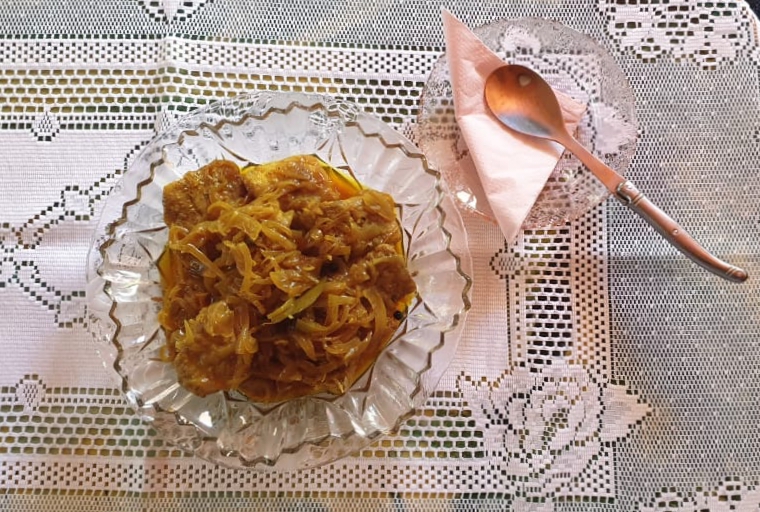
This year, Easter falls at the beginning of the third week of a national lock down in South Africa, but I do know that mom (whose pickled fish is the featured image) and my friend, Jen (who sent me the three photographs above) have both been making pickled fish, using the recipes that their mothers and grandmothers handed down. I’m sure many others across the country have managed to do the same and, while I might be missing out on actually eating it, I feel part of the virtual community who is sharing in the tradition.

PHOTOGRAPHS: Reza Kamies and Jennifer Hardisty

Categories
SLAVERY, RACISM & APARTHEID

Mind Your Language

In spite of dramatic constitutional changes, South Africans remain stuck in the apartheid ways of thinking and relating to each other, living in a society fragmented by racial discourse, and continuing to talk about four distinct ‘races’. Perhaps, this is predictable given a past when artificial concepts of race governed where people lived, went to school, who they loved, what careers they chose and where they would be buried when they died.

Emancipation Day, commemorating the abolition of slavery in the British Empire in 1834, was observed on 1 December in South Africa, although many South Africans are ignorant of the impact of slavery on our history. Almost from the start the Cape was a slave society and, as elsewhere, mixing between Europeans, indigenous and the enslaved occurred, giving rise to a group of creolised people, who would later become known as ‘coloured’ under the apartheid government’s Population Registration Act. This heterogenous group of people resisted classification into ‘white’/European or ‘black’/Bantu and the category ‘coloured’ became a residual one, a hold-all for the “leftovers”.

After their defeat in the Anglo-Boer War, the Afrikaners’ desire for a distinct national identity demanded that they distance themselves from the ‘coloured’ people with whom they shared blood, language and religion. Legislation, justified by sociological, ecclesial and political views, was adopted in order to maintain racial distinctions and prevent further mixing, the presumption being that mixing had been minimal in the past. ‘Coloured’ people were thus stripped of a shared history in order to banish all evidence of past ‘indiscretions’.

In 1973 Andre Brink’s novel, Kennis van die Aand, the first Afrikaans book to be banned by the apartheid government, was criticised for its vilification of the Afrikaner, inhuman portrayal of the police, and for mocking religion. More importantly, says Vernon February, Brink supplies his protagonist, the ‘coloured’ Josef Malan, with “a neatly constructed genealogical tree … that forcibly accounted for … the no-past, no-myth, heritage of the Cape Coloured”. In 1985 Hans Heese’s book drawing attention to the mixed heritage of major Afrikaner families and listing marriages between Europeans and slaves, was similarly banned. Like Brink, Heese was an Afrikaner, writing in Afrikaans, and I believe that their work coming from within the kraal carried more weight.

In order to maintain the myth of racial purity, it became necessary to perpetuate stereotypes about groups of people that continue to inform the present. In Afrikaner mythology, says February, ‘coloureds’ would only perform a functional role within certain “syndromes”, such as the drunken clown. I found that the theme of alcohol is a recurring one from the first time Jan van Riebeek gave the enslaved a glass of brandy to help them learn the Christian prayers, to the tot system that ensured the labourers’ dependency on the farmers post-emancipation. Mohammed Adhikari similarly refers to the so-called inherent characteristics of ‘coloured’ people – such as dishonesty and recklessness, and supposed tendencies towards gangsterism, drug and alcohol abuse that have often been blamed on the idea that ‘colouredness’ was the product of miscegenation.

The prevalence of these stereotypes and their entrenchment in the psyche of the majority of South Africans is illustrated by Trevor Noah’s descriptions of ‘coloureds’ in his 2016 memoir, a New York Times bestseller soon to be made into a movie. Noah is the son of a Xhosa mother and a Swiss (‘white’) father. He distances himself from the apartheid classification (describing himself as “mixed but not coloured – coloured by complexion but not by culture”) and shares his experiences of not fitting into his ‘coloured’ neighbourhood because of the “two types of coloured people” he encountered – those who hated him for being ‘black’ and having curly hair, and those who resented his ‘whiteness’ and “perfect English” and for not speaking “Afrikaans, the language that coloured people were supposed to speak”. Ironically, Noah describes very accurately the space of ambiguity which mirrors the ‘coloured’ experience of occupying the interstitial zone of being neither ‘white’ nor ‘black’, and which was often described to me in my research.

While his story resonates on many levels with ordinary people in South Africa, and offers a lens into what it was like for his family to live and navigate apartheid legislation, his description of the origin of ‘coloureds’ is peppered with stereotypes and inaccuracies, starting with the presumption that ‘coloured’ people speak Afrikaans.  He disseminates a popular myth that ‘coloured’ people originated largely from ‘black-white’ sexual unions outside of wedlock; as a result of prostitution and casual sex between colonists, the enslaved and Khoisan.

The apartheid constructs are deeply embedded in our psyche and we continue to live in a society fragmented by racial discourse. The evidence of how successfully this was accomplished by the apartheidists is illustrated by the way Noah describes ‘coloured’ people as “an entirely new race”. I find this alarming coming from such a high-profile South African who recently received two awards from the NAACP. I believe that the concept of ‘colouredness’ is neither a biological nor an ethnic identity, but a direct result of slavery and creolisation and, later, apartheid social engineering.

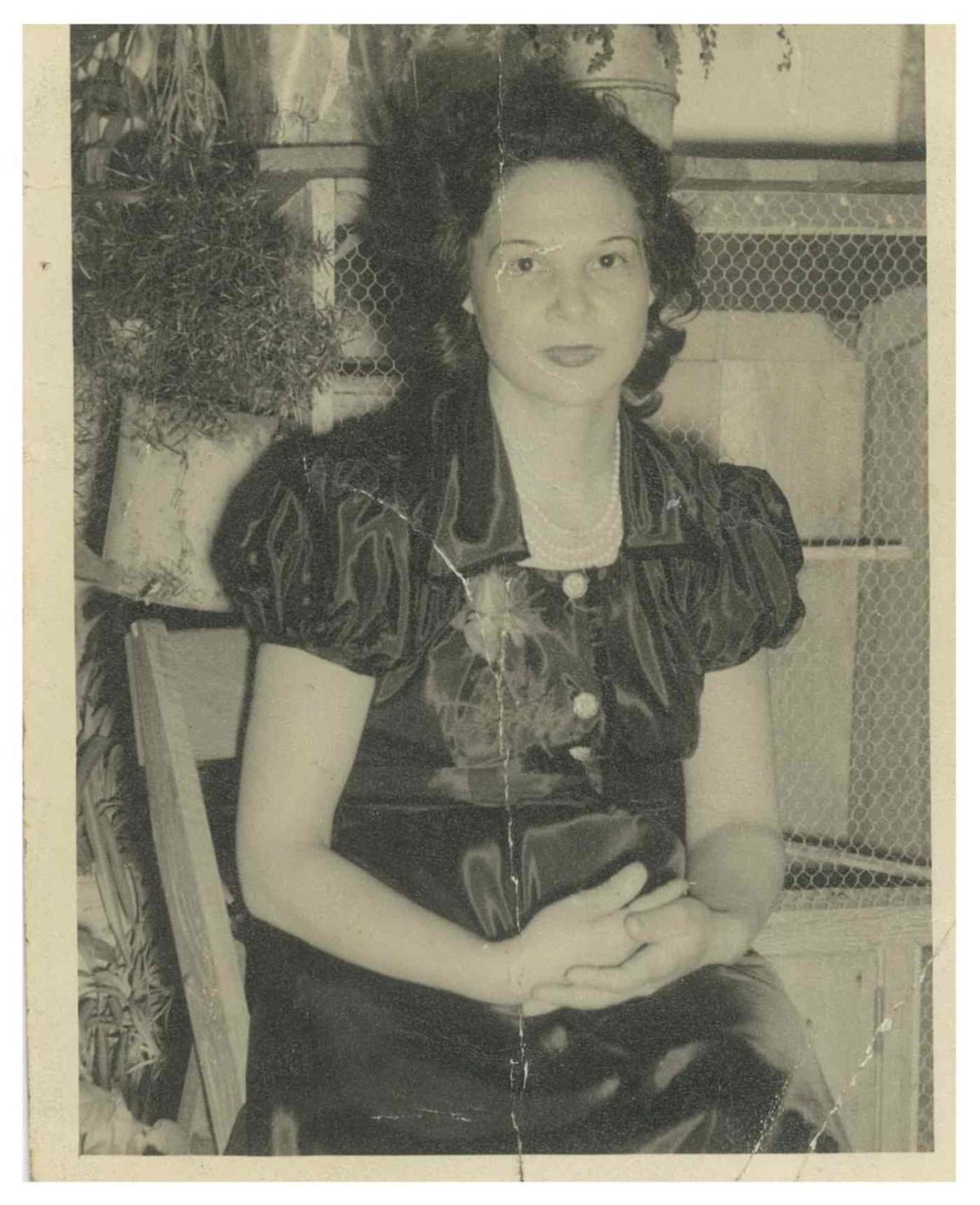
In spite of attempts by the apartheid government to ‘fix’ ‘colouredness’, it remained an ambiguous and fluid identity, heterogeneous in skin colour, language, religion, and culture, as illustrated by the two photographs of my grandmothers, one classified ‘Cape Coloured’ and the other ‘Cape Malay’,  two of the seven subgroups of ‘Coloured’. There is no homogenous ‘coloured’ identity and therefore no essence of ‘coloured’ identity, negative or positive.

More needs to be done than simply remove the laws that entrenched apartheid racial hierarchy – we need to find a new language to talk about the past so that we may address the sense of inferiority and shame associated with racial superiority and the negative stereotyping of colonists and slave masters.

Versions of this article were published in the Cape Argus Thursday 19 December 2019 under the title, Defined by racist labels, and in the Pretoria News on Wednesday 15 January 2020 under the title Misguided notions about ‘coloureds’ and ‘colouredness’, as well as online https://www.iol.co.za/news/opinion/misguided-notions-about-coloureds-and-colouredness-40619261


Categories
SLAVERY, RACISM & APARTHEID

Slave Routes, Slave Roots

In the later 1800s the demand for cheap labour by the mining industry entrenched segregation and promoted a low wage economy which greatly benefitted ‘white’ South Africans.*

On 1 December 1834, slavery was abolished in the Cape Colony, a year after the Slavery Abolition Bill had been passed in Great Britain. The slaves at the Cape, however, were to spend a further four years as “apprentices”, ostensibly so that they could learn skills to become independent, but it was in effect a way of ensuring a further period of unpaid labour to the slave-owners. When the slaves were eventually freed, it was largely without any means to support themselves, with few possessions or a place to live. This dependency served to tie many of them to their masters and to the refuge offered by the mission stations.

In the rural areas of the Western Cape dominated by wine and wheat farms, families continued to live in slave-like conditions, on the farms for generations, controlled through low wages, tied housing, corporal punishment and the dop system (whereby workers were part-paid with cheap alcohol). There was neither incentive nor opportunity to break the cycle of dependency that workers were caught up in. 

Slavery was fundamental to the establishment of the colony at the Cape and laid the ground for later segregation and apartheid. It has shaped our society socially and economically, while influencing attitudes to race and sex that continue into the present. Regulations to control slaves such as restricting their movement with the carrying of passes and the limitation on the size of their gathering, later resurfaced as apartheid laws. It was ‘black’ bodies that were to provide the labour in the mining and agricultural industries, as well as domestic labour, and continues to shape the position of ‘black’ people in South Africa, post-liberation.

Ordinary South Africans are largely ignorant of the history of slavery in our country. The disconnect between this history and the apartheid era makes it “easy” for the lasting impact of apartheid to be minimised, as in the often-heard refrain – “apartheid is over, move on”. While it may be possible to move on from a generation of apartheid, the move from the global legacy of colonialism and slavery and the racism and segregation that resulted, is going to take a little longer.  And do the work, we must. 

My recent trip to the South of the USA allowed me to reflect on this legacy. I was moved to tears on more than one occasion, as we visited slave plantations, museums and memorials and bore witness to the pain and cruelty inflicted by humans against their fellow-beings. The exhibition, From Slavery to Mass Incarceration, at the Legacy Museum in Montgomery, charts the progression from slavery, through lynching, to mass incarceration. The nearby National Memorial for Peace and Justice commemorates the 4 400 African Americans lynched by white mobs between 1880 and 1950 and was a sobering place of reflection after witnessing some of the atrocities committed on black bodies. Its a legacy that continues to dog present-day USA because it has not been properly acknowledged and accounted for.

As we commemorate Emancipation Day this weekend, consider visiting the Iziko Slave Lodge to explore the history of slavery through its many exhibitions. Entry is free on 1 December – Emancipation Day and World Aids Day.  Or join the annual Emancipation Day “Walk in the Night” organised by the District Six Museum.

Read more in this blog

*From a panel in the Iziko Slave Lodge

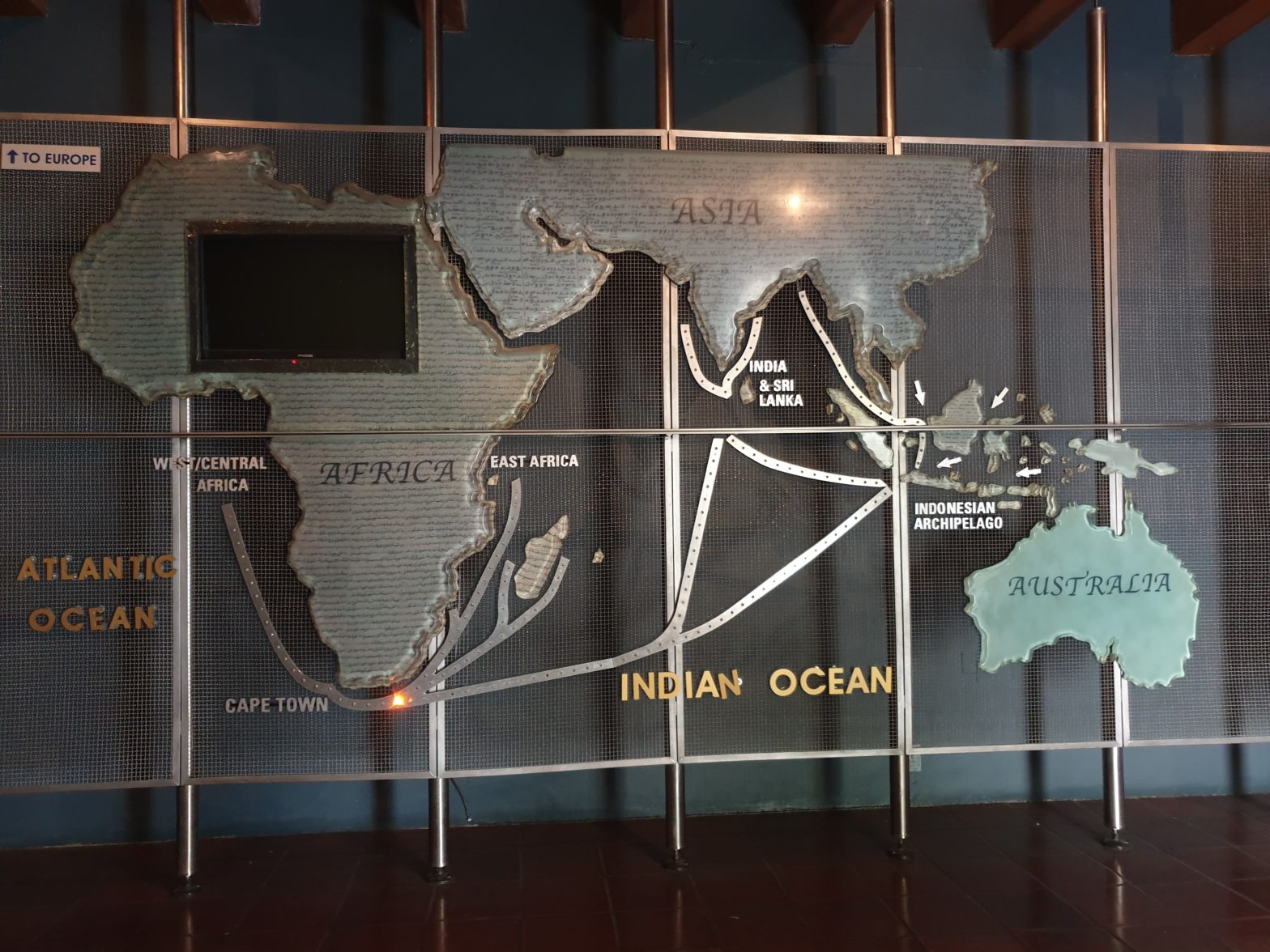
**Featured image shows slave routes to the Cape – from an installation at the Iziko Slave Lodge

Categories
SLAVERY, RACISM & APARTHEID

The Golden Rule*

“In every human breast,God has implanted a principle, which we call Love of Freedom;

It is impatient of Oppression, and pants for Deliverance.”

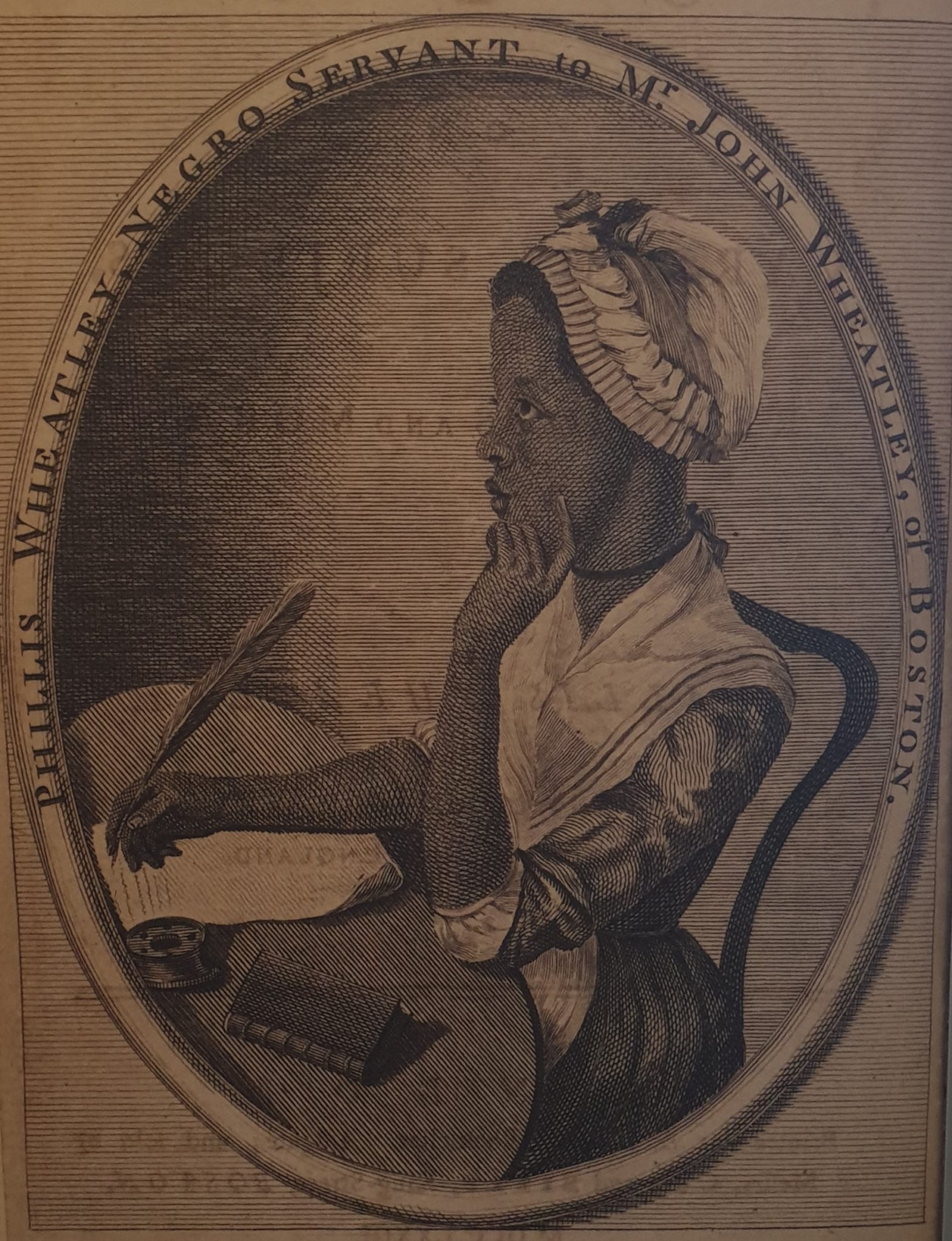
Thus, wrote Phillis Wheatley, a slave and the first African-American woman to publish a book of poetry (1773). Her words could as easily have been referencing the American Revolution as it did slavery.

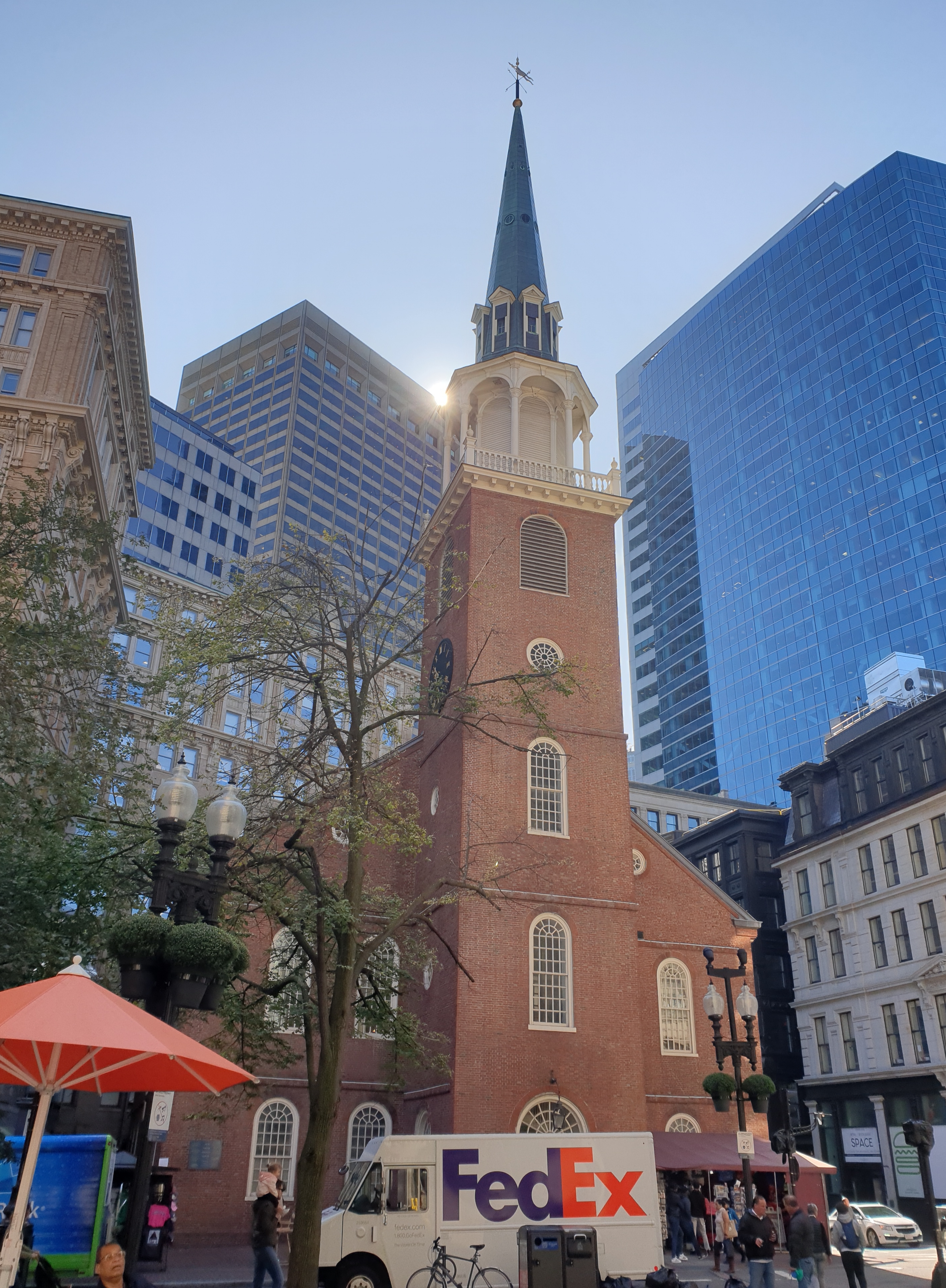
History is literally embedded in the streets of Boston … a red brick line runs down the centre of the pavements, through the Common and across the roads providing the guide to the Freedom Trail – revolution and resistance in every brick. The trail includes the Old South Meeting House (OSMH), a place where the Puritan congregation gathered for both secular and religious reasons, from the 17th century onward. Boston was founded in 1630 by English Puritans who fled religious persecution and the new settlement was named after the place in England from where many of them had come. The immigrants were led by John Winthrop and their goal was to build a purely Puritan society (sadly, this meant an intolerance of other religions and when the Quakers arrived in Massachusetts, they were persecuted and several were executed in the 1650s-1660s by the same Puritans).

20190919_204050
Old South Meeting House

The simple red-bricked façade of the meeting house belies the fact that one of the gatherings held here on 16 December 1773 to protest a tax, was to start a revolution. The meeting of 5 000 angry colonists resulted in what has become known as The Boston Tea Party, a protest against not only the tax on tea, but the perceived monopoly of the British East India Company. The British Parliament retaliated with a series of punitive laws, especially against the state of Massachusetts, which served only to unite the colonies and hasten the war.

Phillis Wheatley worshipped at OSMH, she was baptised there and became a full member in 1771, aged about 17. Old South’s congregation included slave-owners and slaves until 1781 when slavery was outlawed in Massachusetts. Also, in the congregation were descendants of the first Puritans, some of the town’s wealthiest families who worshiped in rented pews on the main floor and first gallery, while apprentices, slaves and servants sat on free benches in the top gallery.

Born in Gambia, West Africa, Wheatley was sold into slavery at the age of 7 or 8 and transported to North America where she was sold to the family, who gave her her last name. Her first name was derived from the name of the ship that brought her to America. In one of her poems she ponders plaintively,

… what pangs excruciating must molest; what sorrows labour in my parents’ breast!

Those few words capturing the pain and hurt inflicted by slavery, not only on the enslaved but on the family they left behind. Wheatley’s book, Poems on Various Subjects, Religious and Moral, was signed by John Hancock and other Boston notables – 17 men asserted that she had indeed written it. She was emancipated shortly afterwards.

In about a week, I embark on a tour of the South with four graduate students from the University of Pretoria. Our journey, which we have dubbed UP Freedom Riders’ Trip, will start in New Orleans and then we meet up with a contingent from Indiana University. The following week is hectic – Memphis, Jackson, Selma, Montgomery, Birmingham and Atlanta, ending in Washington, DC from where the students will fly back home.

My few days in Boston are personal and not officially part of this trip but the experience has made me consider how waves of immigrants have come to America, often forced by circumstances beyond their control and how they have been persecuted by those who preceded them, often in much worse scenarios.

In 1829, another Bostonian, African American writer and abolitionist, David Walker, published a pamphlet entitled Walker’s Appeal, in Four Articles; Together with a Preamble, to the Coloured Citizens of the World, but in Particular, and Very Expressly, to Those of the United States of America. In it, Walker argued for the immediate abolition of slavery rather than the gradual phasing out of the institution and also for the right of every African American to become a full and equal citizen of the United States, rather than the return of freed slaves to America. His ideas would influence the abolition movement long after his death a year later. But it is his poignant question which continues to echo in my head.

Was your suffering under Great Britain one hundredth part as cruel and tyrannical as you have rendered ours under you?

*The Golden Rule – the principle of treating others as you would like to be treated; it is common to many religions and cultures.

Photograph of Wheatley etching taken at the exhibition at the Old South Meeting House in Boston